
Hidden Valley Trail: A Sacred Hike Just "Inside" the Moab Valley Rim

Updated: Sep 12
The Hidden Valley Sacred Moab Hike delivers on its promise the moment you top out on the sandstone rim: an elevated hanging basin tucked out of sight from the highway, quiet enough to feel like a world apart. Once you climb the steady switchbacks and step into its expanse this small world comes to life. The trail head is a couple of minutes outside of Moab City limits, just off highway 191. On the way to Deer Creek retreat in Old La Sal, Ut.
Hidden Valley Trail is a perfect day hike for Deer Creek Retreat guests—the steep switchbacks offer a bit of a challenge, with plenty of stopping areas to take in the veiw and catch your breath, at the top you enter into a grassy valley with epic Moab Rim views, at the end of the trail petroglyphs, and an optional Colorado River extension.
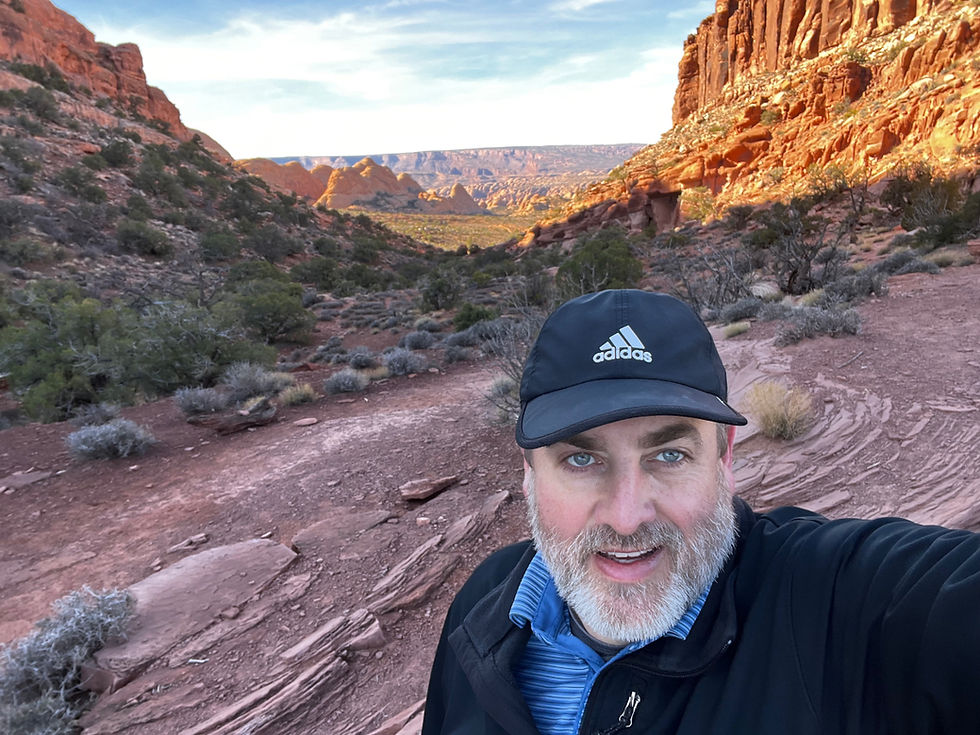
The Switchbacks, the Silence, and the Stone
The climb out of the parking lot wastes no time. It’s a steep, rocky set of switchbacks that weeds out casual walkers right away. But even as a local who has lived around these rocks my whole life, I turn around every single time I stop to catch my breath. For me, taking this kind of hike isn't just about logging a morning workout or getting the heart rate up—it’s about intentionally capturing that sense of awe that the daily grind tries to steal.
When you crest the rim and hit the top, you can't help but stop. I always pause there to take in the moment and let the memory set. I’ve made it a habit to treat these trail ascents like it might be the very last time I’m able to hike them. That mindset makes it sacred, even if it’s your hundredth time up the hill.
My latest hiking experience on Hidden Valley trail began under a crisp desert sunrise, each step revealing more of the Moab red sandstone in front along the large boulders lining the trail and the majestic La Sal Mountains in the backdrop. The blue sky connecting to the snow-capped La Sal mountains makes an amazing contrast when the two meet the deep red rock surrounding all of the Moab area. This trail reveals a sacred world carved by time, the sun, and wind.
By the time I reached the valley floor, the red cliffs seemed to whisper reminders about stillness and strength. It wasn’t just a hike; it was a casual conversation with an old friend, one that left me both grounded and grateful to have wandered off the beaten path. And even though I shared the path with many making the same trek, there was plenty of alone time as people pass one another, with a greeting and "good morning," then we were both off in our own way.
The trail delivers its biggest visual punch if you keep pushing past the saddle rock. Suddenly, the world cracks open again, dropping your gaze straight down into the deep cuts of the Colorado River canyon corridor. The vantage point is every bit as captivating as the front side overlooking Moab Valley.
Tucked along that cliff line are centuries-old petroglyphs. Standing before them, I always wonder what possessed someone living under the brutal rules of desert survival to spend hours chipping art into stone. In a landscape where staying alive took everything, carving seems almost like a leisure activity—or perhaps just an undeniable urge to leave a mark in the stillness.

Trail Quick Facts:
Distance: 4 miles round trip (out-and-back); extend to 7+ miles via the Moab Rim Jeep trail.
Elevation gain: ~680–745 feet (steep initial climb).
Difficulty: Moderate-strenuous (rocky switchbacks, exposed sun).
Drive from Deer Creek: ~35 minutes south of Moab via Hwy 191.
Best time: Spring/fall mornings; summer requires an early start to avoid the heat.
Getting There from Old Lasal
From Deer Creek Retreat, head north Hwy 46 to Lasal Junction, then Hwy 191 north toward Moab. Drive past the first traffic light past the Shell gas station, second left (west) on Angel Rock Road, then right on Rimrock Road to the gravel parking lot/trailhead. Plenty of parking space; vault toilets available.
The Hike: Switchbacks to Hidden Paradise
0–0.6 miles (Trailhead to valley rim): From the southwest parking corner, follow signs up boulder-strewn switchbacks. Steep but short—20–30 minutes of leg burn through piñon/juniper to the Moab Rim top. Sign the register box, entering Behind the Rocks Wilderness Study Area.
0.6–2 miles (Hidden Valley proper): The trail flattens into a stunning grassy hanging valley hemmed by towering Navajo sandstone cliffs. Juniper trees dot the sandy flat; thistles line the path (gaiters help). Open views east to Moab Valley, Lasal’s behind you.
2–2.5 miles (Saddle & views): Climb a low pass with sweeping vistas: Hidden Valley behind, Behind the Rocks fins ahead, Colorado River canyon possible on clear days. Turnaround for a standard 4-mile hike or continue west.
Petroglyph bonus: At the saddle, take a social trail west along the cliff base for extensive Native American panels (2,000+ years old). Look for bighorn sheep, hunters, spirals—respect by not touching.
Why Deer Creek Guests Love the Hidden Valley Sacred Moab Hike
Morning-to-lunch timing: Leave the cabin at 8 am and return by 1 pm for a porch lunch.
Moab contrast: Quiet valley solitude vs. Arches crowds; shade in the afternoon.
Family pacing: Steep start weeds out little kids, but valley flat suits mixed groups.
Photography: Rim-top panoramas, petroglyph closeups, golden-hour cliffs.
Practical Tips from Old La Sal
Water: 3L/person minimum (no sources); fill bottles at the main cabin or tiny home before leaving the property.
Gear: Sturdy boots (slickrock), sun hat/sunscreen (exposed), trekking poles for switchbacks.
Dogs: Leashed OK; grassy valley great for cooldown romps.
Extend it: Moab Rim Jeep trail drops 3 miles to the Colorado River canyon, a few miles before Kane Creek Road (if attempting the longer trail, you’ll need to arrange a shuttle).
Deer Creek connection: From the upper rim, looking east reveals the full silhouette of the La Sals—the very backyard of Deer Creek Retreat. It bridges the sandstone scramble with high-desert solitude: hike hard by morning, retreat to quiet by afternoon.
Exploring Hidden Valley's Sacred Petroglyphs? Stay Prepared
Whether you're exploring the high alpine passes of the La Sals or ascending exposed canyon shelves, equip your trip with our printable and mobile 12-page companions:
High-Desert Survival Field Guide: Real-world wilderness safety, 1-gallon hydration math, 12:00 PM alpine lightning rules, mountain storm protocols, and off-grid navigation checklists.
Moab Grit Hikes Field Manual: Complete 7-trail tactical guides (Mount Peale, Mount Tuk, Moab Rim, and more), friction-footing rules, Angela Duckworth grit diagnostics, and local trail stories.
Pro tip: An early start beats the heat; petroglyphs glow in early-afternoon light, 2–3 hours total for most.
Come out and join us for a night, or stay a week, to experience the Hidden Valley Sacred Moab Hike for yourself; we're ready for you to become a part of our story and enjoy the wild, rugged silence of Old La Sal.
Cheers!
Justin
🥾 The Moab Grit Hikes Series
Mount Peale: Mount Peale Grit Hike: Effort Counts Twice on Southeast Utah's Highest Peak
Mount Tukuhnikivatz: Mount Tukuhnikivatz Grit Hike: How Gritty Are You on Moab's Iconic Skyline Peak?
Portal Overlook: Portal Overlook Grit Hike: Grow Your Grit Above the Colorado River
Moab Rim Trail: Moab Rim Trail Grit Hike: Effort Counts Twice on the Stairmaster
Gold Knob Trail: Gold Knob Trail: Grit, Grace, and the Long Game in the La Sal Mountains
Hidden Valley Trail: Hidden Valley Trail: A Sacred Hike Just "Inside" the Moab Valley Rim
Grandstaff Canyon: Grandstaff Canyon Grit Hike: The Long Obedience That Builds Morning Glory
🎒 Heading out on the trail? Download our Moab & La Sal High-Desert Survival Field Guide for instant mobile and printable access to our 1-gallon hydration formula, 12:00 PM lightning cut-offs, and 10-essential trailhead audits.
About the Author
The author holds a Ph.D. and is an ordained professional chaplain, specializing in the integration of motivation and choice theory, psychological resilience, and pastoral soul care. Transitioning from a ten-year active duty career as a Chaplain in the U.S. Army—where he served within the high-intensity environment of a critical care hospital—his work bridges empirical behavioral science with practical strategies for long-term identity formation. He serves as the primary researcher for grittygritgrit.com, a digital platform dedicated to helping individuals cultivate authentic perseverance through the profound transitions, traumas, and valleys of life. You can explore more of his work and high-mountain-desert writing at deercreeklasal.com.


Comments