
Stories by the Campfire: Ghost Streets of Old La Sal Cow Town near Moab, UT
Updated: Jun 17
Even so, kids will be kids, and taking the family to explore a historic La Sal ghost town that Moab locals love to talk about. However, it also means dealing with the usual road-trip chaos. Somebody has kicked someone. Somebody is “not touching” someone else, in the most annoying way possible. All the while, my wife gives me the doubtful look that says, “We’re still doing this, right?” and I nod, because once you’ve promised your kids a walk through a real-life ghost town, there’s no going back.

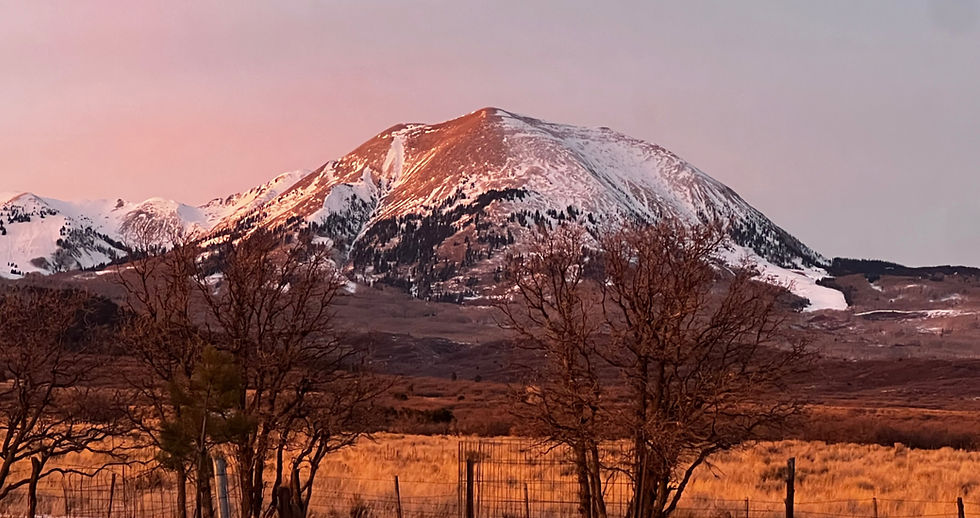
We roll southeast on Highway 46, bound toward the Colorado State border, the stretch was familiar as we had been on this road many times before. The mountain range sat on our left shoulder, snow clinging in pockets upwards at the peaks, the light flattening toward evening. Out here in the Old La Sal area, the land is more open prairie than wooded forest—sage and grass and old pastures, scattered trees like punctuation marks in a long sentence of prairie brush. It’s not the ghost town advertised by Hollywood with those false-front stores and a row of saloons. It’s quieter than that, half-swallowed by growth, the wind and sun that relentlessly came after.
“Where are the ghosts?” the oldest, Jake asks.
“We have to find the streets first,” I say. “The ghosts don’t usually hang out by the highway.”
Of course, I have my gun—we’re in the wilderness. The nine-mil rides in a modern holster on my right hip. I mostly use it to scare off a possible stray dog, coyote, or the highly unlikely bear; I've never actually seen a bear, just heard they roam the area. Utah is an open-carry state, and out here, you’re your own first responder. Just like I carry extra drinking water, I think having a gun is better safe than sorry. Still, I’d be lying if I said the weight of it doesn’t feel a little more present when you’re headed for a place where Butch Cassidy’s Wild Bunch once came, would rob and leave, and where the buildings still speak, as if they were from a place long forgotten and lost.
Onward Toward the Canyon
As the road drops toward the shallow canyon at the south end of the valley, the kids press their noses against the windows. You know they’re looking for something obvious—bleached cattle skulls on fence posts, a “KEEP OUT OR ELSE” sign, maybe an actual translucent figure gliding through the sage.
As the road drops toward the shallow canyon at the south end of the valley, the kids press their noses against the windows. You know they’re looking for something obvious—bleached cattle skulls on fence posts, a “KEEP OUT OR ELSE” sign, maybe an actual translucent figure gliding through the sage.
I lean over to my wife and whisper, “They’re hunting for ghosts already.” I laugh it off, but part of me is listening too.
Instead, remnants of the historic La Sal ghost town Moab travelers look for reveal themselves in pieces.
An old stone foundation half-hidden in weeds.
A line of cottonwoods where a house must have stood to justify the shade.
A collapsed shed with sun-silvered boards.
Fence posts leaning like tired men who stayed on their feet a few decades too long.
We pull off the road to the side of the highway. A wide shoulder presents itself; it’s clear where the dirt track peels away from the pavement. I park the car with ease, but also mindful that we’re not blocking the highway. I then turn back toward my wife and the kids.
“Okay,” I say, slipping into my best mountain-man voice as I check the holster for my gun out of habit. “One rule: if I say ‘back to the car,’ you don’t ask why—you just go. Got it?”
The younger of the middle girls nods rapidly. The oldest girl rolls her eyes. The youngest girl is already halfway out of their seatbelt, ready to bolt. My wife smirks, suggesting she’s heard this speech before.
We step out into the evening air. It smells like hot dust cooling off after a long day in the sun, with a faint hint of sage. The highway noise drops away quickly once you start walking; sound gets swallowed by open space and the low canyon walls ahead.
“This was a real town?” the oldest, Jake asks, skeptical.
“Thriving cow town,” I say. “Ranches, families, kids, dances, and a schoolhouse. It was also a place where people gathered to bet more money on horse races than you’d think possible for a place this small. Then drought and bad winters and economics did what they do.”
“And now it’s just…grass?” the oldest girl, Jane, pipes up.
“Grass and stories,” I say.
La Sal Ghost Town near Moab
Traces of this historic La Sal ghost town that Moab visitors love to discover are found when we follow the faint suggestion of a grid—a two-track running where a street once was. I’ve read enough history to know roughly where some of the old families lived, where the main cluster of houses sat before everything thinned out toward the canyon.
“Look for rectangles,” I tell the kids. “Houses and cellars and barns are likely to be square. Nature doesn’t care much about straight lines.”
Soon, the kids start seeing them: a shallow depression here, lined by rocks that once formed a wall with a set of three stone steps that now lead up to the sky; the ghost of a corral traced in boulders and half-buried posts.
“Whose house was this?” my youngest asks, standing at the edge of what might have been a front room. A small bush grows where a stove might have sat.
“Could’ve been the Rays, or the Maxwells, or the McCartys,” I say. “Ranching families. Big herds. Lots of kids.”
“Kids like us?” she says.
“Kids who probably argued in the wagon the whole way here,” my wife adds, giving them a pointed look.
As the kids grin a little sheepishly.
We move on, stepping carefully. This is public land, but it’s still somebody’s old home. I don’t want us stomping through it like we’re at a playground. The evening light goes soft, sliding down the flanks of the La Sals. Shadows lengthen. The edges of things blur a bit.
“Do you think it’s haunted?” Jane, the oldest girl, asks, unprompted.
“I think places remember things,” I say. “But I also think your imagination does a lot of the heavy lifting.”
“That’s not a ‘no,’” Jake, the boy mutters.
Listening for What Isn’t There
We pause at what looks like the footprint of a larger building—maybe a barn or gathering hall. There’s more stone, more space. The kids spread out, each drawn to a different corner.
“Was there a school here?” the oldest, Jake asks.
“Yeah,” I say. “Church, school, store. Folks rode in from all over for dances. Imagine horses hitched up along this road, music playing, people spilling out into the yard when it got too hot inside.”
I can almost see it if I squint: lantern light, fiddle scraping out a tune, boots thumping, a kid sneaking outside to stare at the stars because it’s all too much.
My youngest, Jeanie, tugs my sleeve.
“Do you hear that?” she whispers.
We all go still without thinking. It’s amazing how fast four kids can freeze when they think something might actually happen.
For a moment, it’s just the ordinary sounds: a light wind whistling through brush, the distant rumble of a truck on highway 46, some bird making a last call before the night drops. Then, faintly, from down toward the canyon, something else, its strange. It sticks out more than just a noice in the wilderness.
It’s not like the baby cry from my Boy Scout campout I had heard years ago when I was a kid. It’s not even a clear sound—more a short, sharp yip, then silence. Could be a coyote. It could be a dog at somebody’s home farther down the canyon road...
Or it could be nothing at all.

But the question of the sound lands in my chest. For a breath or two, then I'm taken back, it feels less like “something in the brush” and more like the night itself leaning in, asking what I really believe about the things I can’t see.
But the timing is perfect. All the kid’s eyes go wide.
“Was that a ghost?” someone breathes.
I feel a flicker in my chest—the part of me that knows it’s “probably just a coyote,” and the part that isn’t quite sure, colliding for a heartbeat. The gun on my hip is a comfort, but it doesn’t have much to say about things you can’t quite identify.
“Yep, it’s probably just a coyote,” I say. “This canyon throws sound around. It still keeps you on your toes and makes you listen a little harder.”
We stand there in the ghost town in La Sal near Moab another minute, quieter than we’ve been all day, just taking in the solitude. Old La Sal rewards you in those pauses—it touches your spirit when you stop and breathe slowly. Out here, it’s easy to feel a real connection to the land, the mountains, and the kind of stillness most people never let themselves notice.
The Weight of What Used to Be
As we make our way back toward the car, the kids start to fill the silence, weaving their own stories into this place.
“That yip? Definitely a ghost cowboy.”
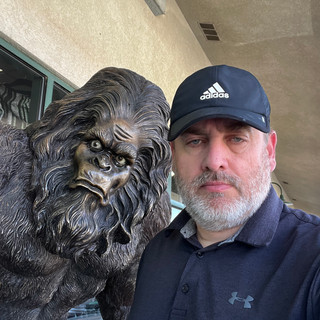
“No, it was Bigfoot’s dog.”
“Ghost cow. Obviously.”
They weave myth and reality together in the upside-down without needing the grayness of the in-between. My wife, a bit startled, walks beside me, quiet for a bit.
“It’s sad,” she says softly, glancing back at the faint grid of cellar holes and foundations. “All this effort, all these families…and then just gone.”
“Not gone,” I say. “Just…folded into everything else.”
We pass one last set of stones, low and square, with what might have been a doorway. I picture a mother standing there once, watching her kids run out to play, dust kicking up behind their heels. Maybe she worried about the same things we do: the weather, money, food, and whether the world was changing faster than she could keep up.
Maybe she stood under the same starlit sky and mountains, in the same evening light, and listened to the same coyotes and dark noises, and wondered what would last.
Jeanie trots back to grab my hand.
“Do you think the kids who lived here are watching us?” she asks.
I consider the question, feel the weight of the holster, the faint ache in my feet, the tug in my chest that always comes when history stops being abstract and starts feeling personal.
“I think,” I say, “that if they could see you running around on their old streets, they’d be glad somebody remembered this place.”
Back to the Present
By the time we reach the car, the sky is sliding from blue to deep indigo. The La Sals are dark shapes now, holding the last of the day’s light along their ridges. The kids pile in, talking over each other, arguing about what the sound really was and who saw “something” by the rocks.
My wife buckles in and looks at me.
“Worth it?” she asks.
I glance back at the ghost streets—barely there now, just a suggestion in the grass and stones—and then toward the direction of Deer Creek Retreat, to where our little cabin and tiny home sit in their own patch of La Sal ground, lights waiting to be switched on.
“Yeah,” I say. “Worth it.”
Places like Old La Sal remind you that everything we build sits on somebody else’s story. The ranchers and cow kids who ran this valley had no idea that someday families would drive out from Moab or farther just to walk their old foundations and listen for noises in the canyon. In the same way, our time in Old La Sal—our porch lights, our kids’ laughter, our own campfire stories—will eventually become someone else’s backdrop.
As we turn back toward the cabin, the ghost town fades into the rearview and the present comes back into focus.
Back at Deer Creek Retreat, it’s easy to imagine the story continuing. You close the car door, and the ghost streets of Old La Sal fade while the cabin porch light comes into focus ahead. The kids tumble out, still half-convinced they heard something impossible down in that canyon, and within minutes, there’s the familiar rhythm of doors opening, bags dropped, fridge checked, beds claimed.
Later, when the house is finally quiet, you step out on the porch one more time.

The valley feels different after a walk through the old town. The same open fields and scattered trees, the same brush and dark, but now layered with the knowledge that this La Sal ghost town near Moab was once full of families who watched their kids disappear into this same dusk. You hear deer moving through the sage—careless, crackling, loud enough to send your heart jumping before your brain catches up. You think about that little noise in the canyon, about the baby-like cries you heard in the mountains years ago, and about how much of life happens in that space between “just a deer” and “what if it was Bigfoot.”
The Glock on your hip is solid and practical. The stories in your head are anything but. Somehow, out here, both feel right at home.
You stay until the chill nudges you back inside. The cabin door shuts with that satisfying, human sound, and for a moment you picture the old cow-town mothers and fathers doing the same thing—closing up for the night, trusting the stars and the walls and whatever else was out there to do their work.
If you’re reading this from the cabin couch or planning your first visit, discovering this La Sal ghost town Moab history is just one more chapter you can step into from Deer Creek Retreat. Spend a day tracing deserted streets, discovering the remants of what is forgotten, and listening to the canyon, then come back to a warm bed, a working kitchen, and your own porch overlooking the vast plain and the mountain. Book a few nights at the cabin, or the tiny home, bring your people, and let this place hand you a story or two you’ll still be telling long after the fire has gone out.
Come out and enjoy Old La Sal, you'll be glad you did!
Justin
About the Author
The author holds a Ph.D. and is an ordained professional chaplain, specializing in the integration of motivation and choice theory, psychological resilience, and pastoral soul care. Transitioning from a ten-year active duty career as a Captain in the U.S. Army—where he served within the high-intensity environment of a critical care hospital—his work bridges empirical behavioral science with practical strategies for long-term identity formation. He serves as the primary researcher for grittygritgrit.com, a digital platform dedicated to helping individuals cultivate authentic perseverance through the profound transitions, traumas, and valleys of life. You can explore more of his work and high-mountain-desert writing at deercreeklasal.com.


Comments