
The Sanctuary of the Ordinary: Practicing Presence in Small Moments

Updated: Jun 20
The habit of practicing presence in small moments is beautifully captured by a line from the book The Practice of the Presence of God by Brother Lawrence that has stayed with me for years:
The time of business does not with me differ from the time of prayer; and in the noise and clatter of my kitchen, while several persons are at the same time calling for different things, I possess God in as great tranquillity as if I were upon my knees at the Blessed Sacrament.' — Lawrence, Second Conversation
He wrote those words as a man who spent most of his life in a kitchen, washing pots, cooking meals, and doing chores when nobody was watching. And yet, for him, those ordinary hours working in the mediocre were not a break from God. They were the place where he felt God most present.

He wasn’t talking about a life that floated above reality. He was talking about a life in which God was as near in the clatter of dishes as in the quiet of a chapel. That idea has become a kind of spine for how I think about retreat—especially in a place like Old La Sal.
Practicing the presence of God in small moments
I think “practicing the presence of God” can sound more mystical than it is. Brother Lawrence was not trying to impress anyone. From what we know of him, he was a fairly simple man who discovered that if he turned his attention toward God in the small, repetitive tasks of his day, those moments became worshipful prayer.
Not long, polished prayers.
Not the right words in the right order.
Just the habit of turning his attention Godward—again and again—while he worked.
For me, that’s a helpful way to think about presence: not a spiritual trick, but a posture. It’s the choice to say, even in the most ordinary moments, “You are here, and I want to be with You in this,” and then to keep doing whatever you were already doing—only more spiritually awake.
Retreat, in that sense, is not about escaping ordinary life. It’s about learning how to see the ordinary differently, so that when you go home, the dishes and commutes and bedtime routines can also become sanctuaries, not just the rare “quiet times.”
Deer Creek Retreat gives some of those moments a different backdrop, that’s all.
Ordinary sanctuaries at Deer Creek Retreat
If you’ve never been here, the idea of practicing presence in small moments might sound vague, so let me make it concrete. Here are a few of the ordinary moments I’ve watched turn into something more on this piece of land.
Morning coffee on the porch
Imagine stepping out onto the porch in Old La Sal before anyone else is awake. The air still has that high desert chill in it. The La Sal Mountains rise in front of you, not making a scene, just being there the way they always are.
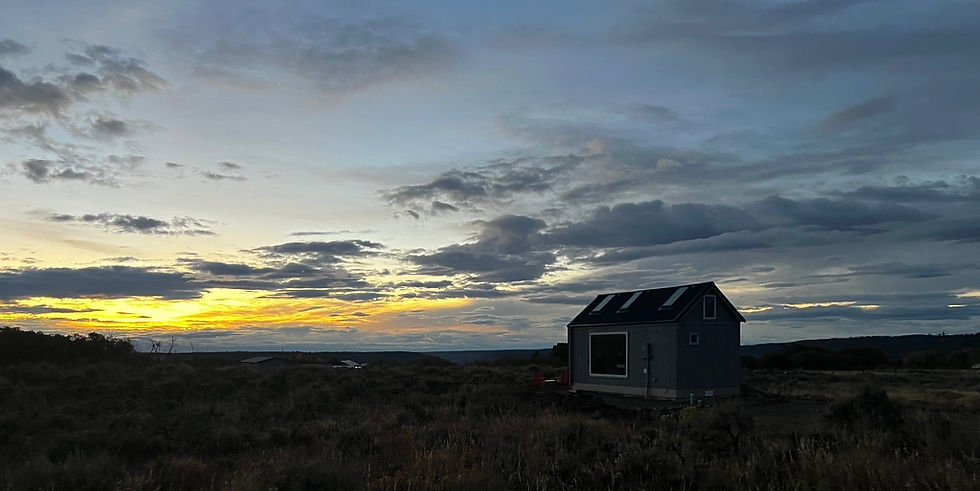
You hold a warm mug in your hands. Steam curls up into the cold. The only sounds are a distant crow, the rustle of wind in the junipers, maybe the sky speaks as the blanket of stars fade into the distance.
There is nothing spectacular happening. It is just you, coffee, breath, and mountains.
Practicing presence in that moment might be as simple as this: taking one slow sip and whispering in your spirit, “You’re here. I’m here. Thank You.”
No big production. Just attention.
Morning light through the blinds
In the main house, there are certain times of day when the light slips in through the blinds in thin, bright bands across the carpet. It’s not a classic log cabin scene—no rough-hewn floorboards or antler chandeliers—just an ordinary room in an ordinary house that happens to sit in an extraordinary valley.
Most days, most places, that kind of light comes and goes without anyone noticing. We’re usually moving too fast.
Practicing presence there might look like pausing for thirty seconds, standing or sitting where the sunlight falls, feeling its warmth on your hands or your feet, and letting your mind whisper something as simple as, “This small warmth is a gift.”
You don’t have to say it out loud for it to count as prayer.
Washing dishes after dinner
Evenings here can get very quiet once the sun drops behind the ridge. The last of the light fades from the valley. The inside of the main house glows a little warmer. People who arrived tired that first day often find themselves lingering over dinner instead of rushing to whatever is next.
When I think of Brother Lawrence, I often picture someone standing at a sink like that—hands in warm water, plates and mugs and silverware clinking gently, conversation ebbing and flowing in the background.
Out here, washing dishes after dinner can become a small act of love for the people you came with and a small act of worship toward the One who gave them to you. It’s a moment where your hands know what to do, which frees your heart to say, “Thank You for this day. Thank You for these people. Be with us even here.”
The sanctuary, again, is not in the specialness of the task. It is in the awareness that you are not alone in it.
Wind in the junipers at night
One of my favorite ordinary moments on this property is stepping outside at night when the wind moves through the trees. The La Sal Mountains loom in the dark. The sky is scattered with more stars than most people have seen ever in their lifetime. The wind threads its way through the branches with a sound that is somehow both gentle and insistent. A sudden movement of deer crossing the property, eyes glowing as the look up at the sound of the house door.
There is no sermon in that wind. It does not spell out words. But it has a way of quieting the noise inside us if we let it.
Practicing presence there might be as honest as saying, “I don’t have all the answers. But I’m here, and I’m listening.”
Sometimes that is the most faithful prayer we can manage.
Why the ordinary matters more than the rare

Most of us do not live our lives on a retreat. We live them in kitchens, offices, classrooms, cars, and living rooms. We move through emails, errands, laundry, school drop‑offs, and bills. If God is only present in the rare, “holy” moments, then most of our lives are going to feel pretty secular.
But if God is present in the ordinary, and we can learn to attend to that Presence, then the ordinary is where most of our life with Him will actually happen.
That’s part of why I care about places like Deer Creek Retreat. They are not meant to be a stage for religious performance; they are meant to be a perfect practice ground for practicing presence in small moments. A place where, for a couple of days, you get to slow down enough to notice what was always true: that the God who meets you on a porch in Old La Sal can also meet you at your kitchen sink back home.
When you leave here, I do not want you only to miss the mountains. I want you to recognize the sacredness of your own front yard, your own morning coffee, your own small patch of sunlight on a busy Tuesday.
Imagining your own “sanctuary of the ordinary”
So, imagine this:
Waking up in the main house, the kids still asleep, and taking ten quiet minutes on the porch before anyone else needs you.
Staying in the tiny home and letting the first fifteen minutes of your day be just breath, coffee, and a psalm or a simple prayer instead of your phone.
Turning one meal into a slow, shared ritual—no TV, no rush—just real food, real conversation, and the sense that this, too, is worship.
Taking a short walk along the road or the property line and letting yourself ask God one honest question you’ve been avoiding, then listening in the silence for whatever comes to mind.
None of that requires a perfect schedule. None of it requires you to be spiritual on command. It just requires enough space that your soul can catch up to your body.
That’s what I hope people find here: not a dramatic mountaintop experience, but a quieter, steadier way of being present to God in the small things.
A quiet challenge: come practice the Presence of the Now
If you’ve read this far, there might already be a small part of you that knows you need this—not another conference, not another new idea, but a handful of ordinary moments where you can actually practice His presence and be where you are and remember that God is there too.
So here’s the challenge:
Block off a weekend. Come out to Old La Sal. Leave a little room in your schedule on purpose.
Book the main house if you want space for family meals, lingering conversations, and the kind of shared ordinary life that’s been hard to find lately. Or choose the tiny home if this season is more about quiet—just you, (or you and a partner) your thoughts, and the sound of wind in the junipers.
Come practice the Presence of the Now with us.
A quiet weekend might be the smallest, holiest rebellion you’ve made in years.
Cheers!
Justin
About the Author
The author holds a Ph.D. and is an ordained professional chaplain, specializing in the integration of motivation and choice theory, psychological resilience, and pastoral soul care. Transitioning from a ten-year active duty career as a Captain in the U.S. Army—where he served within the high-intensity environment of a critical care hospital—his work bridges empirical behavioral science with practical strategies for long-term identity formation. He serves as the primary researcher for grittygritgrit.com, a digital platform dedicated to helping individuals cultivate authentic perseverance through the profound transitions, traumas, and valleys of life. You can explore more of his work and high-mountain-desert writing at deercreeklasal.com.


Comments