
Your 48‑Hour Presence Retreat: A Simple Guide to Being Here

Updated: Jun 19
Most of us think we need more time, but embarking on a 48-hour presence retreat reveals that what we are actually starving for is a completely different pace.
We tell ourselves we need more time off work. More time away from responsibilities. More time to finally catch our breath. But the truth is, more hours won't fix a crowded mind if we just fill them with the same internal noise.
That’s what this weekend blueprint is for—a simple, no‑pressure way to spend a couple of days at Deer Creek Retreat in Old La Sal that lets your nervous system exhale, your soul catch up, and your body remember what it feels like to be somewhere on purpose, not just passing through

You don’t need to be “good” at doing a retreat to try this. You don’t need the right words or the right background. You just need a willingness to show up, slow down, sit in calm, and let the land do some of the work.
Think of this as a mini life rule, but for just this one weekend to try on for size.
Friday Evening: Arrival on Purpose
Most trips start with hurry—packing, driving, last‑minute texts, GPS rerouting. It’s no surprise we carry that same speed into the first night.
For this weekend, try something different.
1. Arrive in 30 minutes of quiet
When you pull up and step inside, resist the urge to fill the space with noise.
Walk through the house slowly.
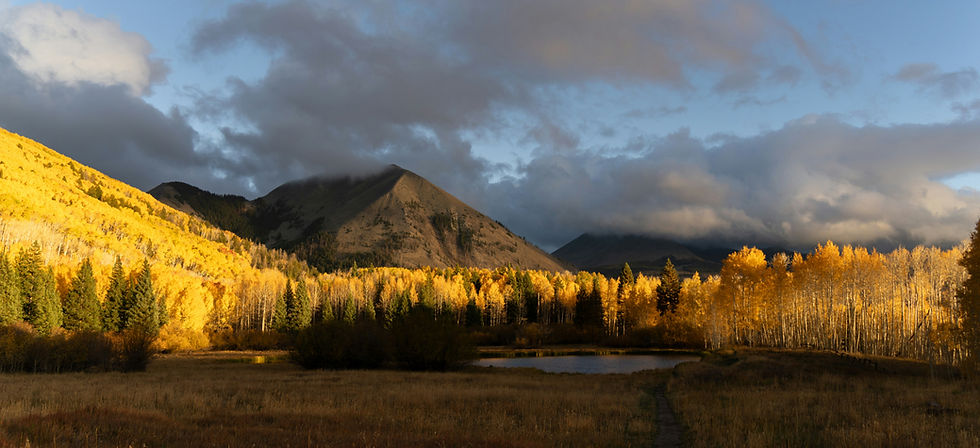
Notice the view out the windows—the Old La Sal valley, the mountains punching out of the land.
Let the silence feel strange if it needs to. You’re not doing it wrong if your brain is still loud.
For the first 30 minutes, treat this arrival as an unpacking of your soul as much as your bags.
If you’ve read about Old La Sal’s history and Todd’s story, remember: you’re stepping into a place that started as “five acres of nothing” and became a quiet place of spiritual reset for a family that has lived in and around this valley for decades. You’re not just in a rental. You’re walking into a story.
2. Put phones in a drawer
There’s no cell service here. The only way your phone connects is through the Wi‑Fi or Starlink, and you get to decide when that happens.
Choose a drawer, basket, or shelf to be your phone resting place.
Put your devices there for the evening.
If you need them for one quick check‑in, that’s fine. But let the default be “away,” not “on me.”
You are practicing what on the Duke Today site, in an article called, "How to Turn Down the Noise and Turn Up Your Well-Being," researchers call intentional quiet breaks—small stretches of time where your nervous system gets to downshift out of constant alert.
3. Simple meal, slow conversation, early night
Keep your first dinner deliberately simple.
Soup and bread.
Pasta and salad.
Breakfast‑for‑dinner if you want.
Cook it slowly. Let the kitchen be a small cathedral for the night—pots and pans, well water, ordinary plates, and the choice to let even chopping vegetables be an act of love.
If you’re here with someone:
Eat at the table.
Ask one or two real questions.
No TV on in the background.
If you’re here alone:
Eat at the table anyway.
Look out the window between bites.
Let the quiet sit there with you.
Go to bed earlier than you usually would. Let your body know this weekend is going to be different.
Saturday Morning: The Heart of Your 48‑Hour Presence Retreat
Saturday is the heart of your 48‑hour presents retreat. You don’t need a complicated schedule. You just need a gentle rhythm.
1. Start with 10–20 minutes on the porch
Before you pick up your phone or open your laptop, make coffee or tea and step out onto the front porch.
Sit or stand where you can see the full sweep of the valley.
Notice distant mountain ranges stretching toward the east, in Colorado and Telluride, back behind to the northeast, the La Sal Mountains rising bigger than any photo can capture.
Set a timer for 10–20 minutes if it helps.
During that time:
No talking (unless you’re with kids who need whisper‑level conversation).
No reading.
Just breathing, sipping, and noticing.
If you want to pray, keep it simple:
“Thank You for this.”
“Help me be here.”
“I’m listening.”
Silence like this gives your nervous system a chance to move out of constant “fight/flight” and into the calmer, repairing mode your brain needs.
2. Mid‑morning walk: horizon therapy
After breakfast, take a short walk.
It doesn’t have to be a hike. It can be:
out toward the middle of the property, crunching through tumbleweeds and tall grass,
or down the road and back, just far enough that you can turn around and see the house in its valley context.
As you walk:
Pay attention to the horizon.
Let your eyes rest on something far away.
Notice how it feels inside when you realize your inbox is not the size of the sky.
Studies and spiritual writers agree: looking across a vast landscape is a form of rest—your brain and body recalibrate when they’re reminded they’re part of something bigger and more grounded than your news feed.
Saturday Afternoon: Rest, But Not Productivity
Afternoons are where many retreats get hijacked. We have a whole stretch of hours and think, “Maybe I should get some work done.” Not ‘getting something done’ in the usual way doesn’t mean you’re being unproductive.
For this one weekend, don’t.
1. Choose a nap or a book
Give yourself permission to:
take a nap,
or curl up with a book (a novel, the Psalms, The Practice of the Presence of God if you brought a copy),
or simply lie on the couch and stare out the window for a while.
The goal is not to maximize your time.
The goal is to give your brain and body a longer dose of quiet than it usually gets, the kind the Duke Today article calls especially helpful for resetting mood and focus.
2. Practice presence in one small task
At some point in the afternoon, pick one ordinary task and do it like Brother Lawrence in his book Practicing the Presences of God, desibed in the book (letters):
slowly,
attentively,
with love.
It could be:
washing dishes from lunch,
making the bed,
sweeping the porch,
or making a simple snack.
As you do it, keep circling back to a simple prayer:
“Thank You for letting me serve in this small way.”
“Be with me even here.”
No need to be dramatic. You’re just letting one little thing become a doorway into Presence.
Saturday Evening: Stars and Honest Words
Saturday night is your chance to listen a little deeper.
1. Early evening: gentle meal
Make another simple dinner—something that doesn’t chain you to the stove.
Eat slowly.
This time, maybe ask:
“What have you noticed so far?”
“How does your body feel compared to when we arrived?”
“What’s surprised you about the quiet?”
If you’re alone, you can jot your answers in a journal or just think them through. Naming them helps them stick.
2. Late evening: stargazing and journaling
If the sky is clear and the moon is down, step onto the porch or into the yard.
Look up.
Let the Milky Way smack you up side the head, figuratively.
Take your time.
Here are a few questions you can carry with you:
What feels smaller now than it did on Friday?
What feels more important?
What did the silence show you about what you’ve been carrying?
Where did you sense God (or peace, or clarity) in the last 24 hours?
Write a few lines about it. Not an essay. Just enough that the experience has a place to land.
Remember: silence isn’t empty here. It’s full of presence, memory, and possibility. You’re standing in a valley shaped by cow towns and ghost streets, by a young man named Todd who bought “five acres of nothing,” and by a family that has come to this land for decades searching for rest, even before they knew what to call it.
Tonight, you’re part of that story.
Sunday: What Will You Carry Home?
Sunday is your landing day. You’ll pack, clean up, and make your way back to the rest of your life. Before you go, give yourself a little space to decide what comes with you.
1. Short morning porch time
Repeat your Friday/Saturday morning ritual—coffee or tea on the porch, 10–20 minutes of quiet. Notice if it feels different today.
Is your body less jumpy?
Does the quiet feel less threatening, more like a friend?
Do the mountains feel as big, or somehow more familiar?
2. Simple reflection: three questions
Take 20–30 minutes somewhere comfortable—porch, couch, kitchen table—and walk through these three questions:
What did I notice?
about my body (breathing, tension, sleep)
about my mind (racing thoughts, clarity, creativity)
about my spirit (longings, questions, prayers)
What felt most healing or alive?
the 2 a.m. stars?
the afternoon nap?
the quiet walk?
washing dishes with a strange sense of peace?
What one or two practices do I want to carry home?
a 10‑minute morning porch (or balcony, or backyard) ritual,
one device‑free walk per day,
one meal a week eaten slowly at the table,
one small daily task done as prayer.
Write your answers down. This is your “mini rule of life” starting to form.
3. Blessing the land as you leave
Before you drive away, step outside one more time.
Look at the valley.
Look at the mountains.
Take one deep breath of the high desert air.
If you’re a person of faith, you might say:
“Thank You God, for meeting me here. Keep working in me as I go.”
If you’re not sure what you believe yet, you might simply say:
“This helped. I want to remember.”
Either way, you’re acknowledging that this was not “just a weekend.” It was a reset.
A presence‑first invitation

You don’t have to follow this guide perfectly. You don’t have to live up to it. It’s not a test. It’s an invitation.
If something in you has been quietly asking for this—for silence that heals instead of isolates, for solitude that feels safe, for a house that doesn’t demand perfection but offers presence—consider planning your own 48‑hour presence retreat.
Book the main cabin if you want to bring a group of people you can sit in silence with and share slow meals.
Book the tiny home if this season is more about (you or with a partner) solitude, journaling, and letting the night sky do its work.
If this sounds like what your soul’s been quietly asking for, here’s your next step:
Start looking at your calendar.
Then pick a weekend, choose the main cabin or tiny home, and give yourself 48 hours to be here—really here.
The land will help you turn down the noise.
You don’t have to do it, solo or alone. Its a choice to experience life at a slower pace.
Cheers!
Justin
About the Author
The author holds a Ph.D. and is an ordained professional chaplain, specializing in the integration of motivation and choice theory, psychological resilience, and pastoral soul care. Transitioning from a ten-year active duty career as a Captain in the U.S. Army—where he served within the high-intensity environment of a critical care hospital—his work bridges empirical behavioral science with practical strategies for long-term identity formation. He serves as the primary researcher for grittygritgrit.com, a digital platform dedicated to helping individuals cultivate authentic perseverance through the profound transitions, traumas, and valleys of life. You can explore more of his work and high-mountain-desert writing at deercreeklasal.com.


Comments