
Expressive Writing: Trauma Healing Journaling on the Front Porch

Updated: Sep 5
Some wounds do not show on the surface, which is why trauma healing journaling on the front porch offers such a powerful way to process what lives quietly in the nervous system, the imagination, and the half-finished sentences we never quite find the courage to say out loud. For many of us, navigating a major crisis creates a hidden fracture: our outer life keeps moving, but our internal trust feels fragile. In that heavy tension, picking up a physical pen allows us to bring our history into the stillness of the mountains, letting the landscape hold space for the past while we author a brand-new path forward.

Unlike polished narratives, public vulnerability, or social media updates, expressive writing happens in absolute privacy. Out here, you are not performing for anyone, nor are you editing your thoughts for a future audience. You are simply putting into words what has often only existed as tight bodily sensations, sudden flashes of memory, a nameless dread, or a vague sense of unworthiness. From a grounded mindfulness perspective, this kind of honest, slow-paced storytelling mirrors the ancient human tradition of raw lament: naming our deep pain exactly as it is, releasing it into the vastness of the universe, and slowly discovering that the chapter of our suffering is not the only chapter being told.
Holding Space for the Dark Chapters
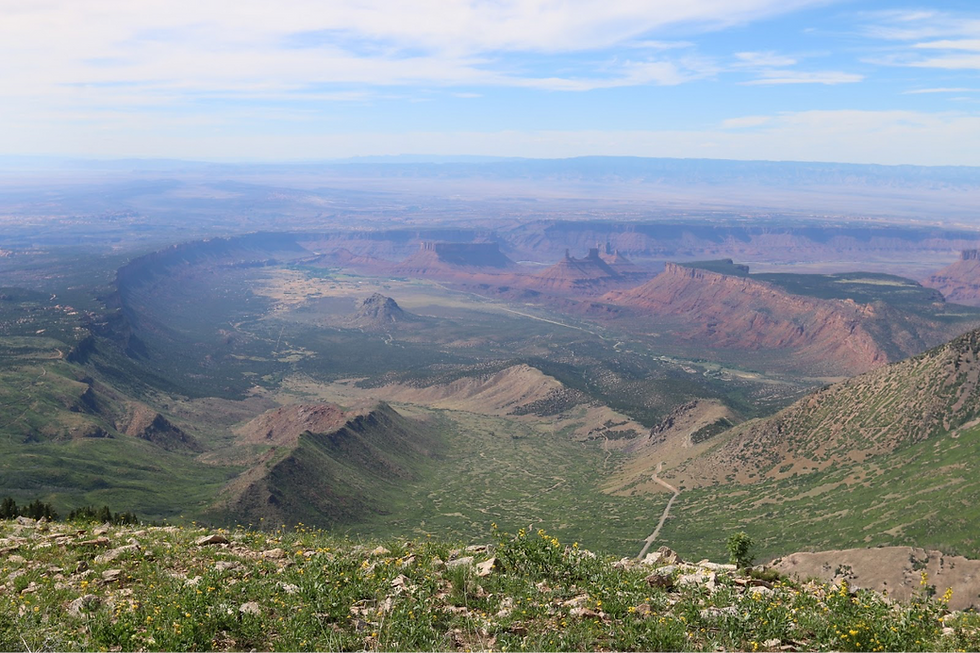
The natural world does not offer a sanitized view of existence. If you look out past the porch toward the red canyons and weathered rock formations north of the retreat, the other side of the mountain, you see a landscape sculpted by violent shifts, intense erosion, and brutal seasons. Yet, it stands magnificent and whole. That is the exact conceptual frame for our writing practice out here on the front porch: we write with radical honesty because the unyielding bedrock beneath us is not threatened by the raw truth of our emotional pain.
At the same time, a mindful approach to healing insists that hardship is never the final word. We live our lives in a constant rhythm of endings and new beginnings, seasons of drought followed by unexpected renewal. When you write about your deepest trials with this expansive horizon in view, you are not required to tie everything up neatly with a perfect bow, but you are also not abandoned to emotional chaos. You are locating your immediate pain inside a much larger, enduring story where peace is entirely possible even in the midst of silence, and where deep meaning can be forged even when clear explanations are completely missing.
Researchers who study human resilience and meaning-making frequently stress two truths simultaneously: we must never minimize the devastating depth of human suffering, and we must never minimize the incredible human capacity for purpose, growth, and even joy to emerge from those identical ashes. The human heart is fully capable of holding both deep sorrow and stubborn hope in the exact same breath. Expressive writing becomes a practical, tactile way to hold that tension right on the page: you tell the truth about your wounds while actively training your eyes to spot the small traces of grace, hidden strength, and enduring perseverance that carried you through.
Trauma Healing Journaling Through Grit and Mindset
Difficult experiences have a unique way of freezing us in time. Instead of a flowing, dynamic life story, we are often left with scattered emotional scenes and a heavy, dominant internal script that loops endlessly in our minds: “I am completely unsafe,” “I am entirely powerless,” or “I am permanently broken.” Modern research on psychological grit and a growth mindset gives us a brilliant, practical vocabulary for what it looks like to push back gently—but persistently—against those paralyzing scripts.
In this context, deconstructing our internal noise stories and rewriting our narratives requires a deliberate look at how we define stamina. As you listen to the deep quiet of the high desert, consider how these frameworks interact with your healing:
The Grit to Show Up

Grit, understood as the combination of long-term passion and perseverance, is never about aggressively muscling through a emotional wound or pretending that a betrayal doesn’t hurt. True grit looks like returning to your healing practices again and again: showing up for yourself, reaching out to supportive people, choosing a quiet weekend in the mountains, and coming back to the page. A gritty approach to trauma healing journaling means choosing to write for just fifteen minutes three days in a row, or revisiting a heavy memory in small, structured, manageable doses instead of avoiding it completely. The effort isn't loud or glamorous, but over time it changes the entire texture of your life. You begin to see yourself not merely as a passive survivor of hardship, but as an active, courageous collaborator in your own recovery.
Embodying the Growth Mindset
A fixed mindset whispers, “This is who you are now; you will always be this anxious, this numb, this damaged.” A growth mindset aggressively counters, “This is exactly where I am right now, but profound change is possible, and I can learn entirely new ways to respond.” Engaging in expressive writing on this porch completely embodies that growth mindset. Each session with your notebook becomes a gentle, safe experiment. You are practicing the core belief that your emotional world is not static—that with time, focused effort, and self-compassion, your inner responses can be completely reshaped.
When grit and a growth mindset are integrated into an open, spiritual vision of healing, they stop being rigid self-improvement projects and become an intentional way of cooperating with your inner wisdom and whoever you call God. You are not trying to "earn" your wholeness through exhausting labor; you are simply showing up consistently to the quiet places where clarity meets you: honest self-examination, authentic release, and small, courageous steps of faith in your own resilience.
Widening the Lens: Why the Page Matters
Narrative therapy teaches us that we experience life entirely through the stories we mentally construct... Dedicated trauma healing journaling expands that frame. The specific meaning we attach to an event—the way we frame "what happened"—directly dictates our identity and our future possibilities. Hardship often traps us in a narrow, dark tunnel narrative, where a single moment or a painful season comes to define the entirety of our worth. Expressive writing expands that frame. It gives you a safe vehicle to explore your history, not to erase the dark chapters, but to see them as a single segment within a massive, beautiful journey.

In practice, this means doing something far deeper than aimless venting. You are not just rehashing your worst moments on the paper; you are actively organizing how those moments fit into your life before, during, and after the storm. Writing slows our racing thoughts down just enough to help us notice patterns, hidden contradictions, and quiet flashes of daily courage we usually overlook in a hectic week. It creates an objective distance when memories feel too loud, and brings a gentle closeness when we have been emotionally numb for too long. For many, the page becomes the perfect middle space between isolation and overexposure—far more contained than speaking out loud, and far more honest than what we can say to the outside world.
🎒 Headed Past the Porch into the Backcountry? Equip Your Daypack
Venturing off the porch to explore the rugged slickrock canyons, remote arroyos, or high alpine ridges of the La Sals? Pair your time in the high desert with our digital 12-page backcountry field companions:
Moab & La Sal Desert Field Survival Guide: Tactical backcountry protocols, our 1-gallon hydration formula, the mandatory 12:00 PM alpine lightning rule, slot canyon flash-flood hydraulics, the tactical S.T.O.P. disorientation protocol, and the 10-essential trailhead audit checklist.
The Ancient Rock Art Field Companion: Desert varnish biochemistry, Archaic-to-Puebloan diagnostic motifs, solstitial light daggers, the 4 baseline stewardship laws, and turn-by-turn route guides for Hidden Valley, Kane Creek, and Mill Creek.
Instant PDF downloads for offline smartphone reference and ink-friendly daypack printing.
Your Safe, Four-Step Porch Framework
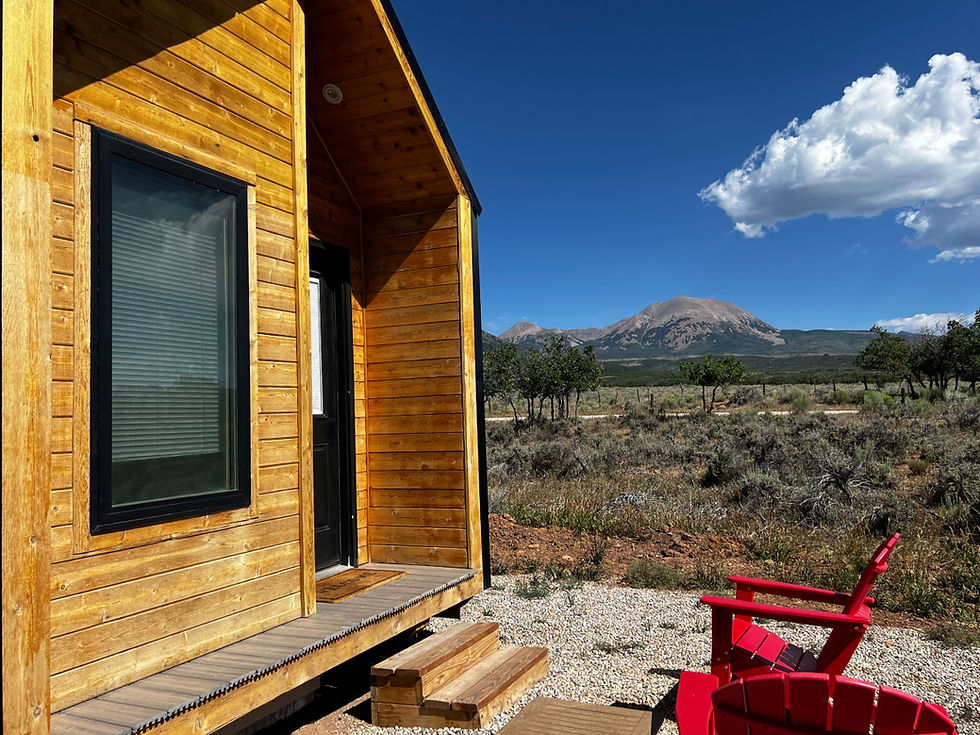
Whether you are curled up on the expansive, panoramic porch of the Main Cabin or sitting in the minimalist, focused quiet seating area of the Tiny Home, open your journal and move through this structured, four-phase practice at your own pace.
Phase 1: Prepare Your Space and Set Limits
Because emotional work is tender, your physical safety comes first. Choose a quiet morning or evening on the porch when you will not be interrupted. Decide ahead of time exactly how long you will write (15–20 minutes is ideal), and plan a simple "landing activity" for immediately afterward: a walk down the dirt driveway, a favorite song, a deep breathing exercise, or a moment of quiet meditation. Before your pen touches the paper, remind yourself: “I can stop whenever I want. I am in total control. I am writing in a safe sanctuary, and I am allowed to slow down.”

Phase 2: Write the Raw, Unfiltered Story
Set a timer for 15 minutes. During this window, write continuously about the stressful or heavy experience. Focus completely on your raw thoughts and feelings—not just the clinical facts of what happened, but what it meant to you. Completely ignore grammar, spelling, and punctuation. If you get stuck, literally write “I don’t know what to say” until the next words come. Allow your body's sensations ("my chest feels tight," "my hands are cold") to go directly onto the page. You are not editing; you are simply witnessing. If you feel flooded, pause, look out at the stable peaks of the La Sals, and write a grounding sentence: “Right now, I am sitting safely on this porch; I am in the present; I am safe.”
Phase 3: Connect, Organize, and Reframe
On a subsequent day of writing on the porch, begin to organize the fragments. Ask yourself:
What factors or chapters came before this specific experience?
How has this event historically affected my beliefs about myself, others, and the world?
Where can I see tiny hints of courage, help, or self-protection during that storm?
This is where you look back down the trail of your life and ask: “Where did I keep going when it would have been easier to fold?” and “What have I discovered about my own grit that I wouldn't have seen without this trial?” Naming both the true harm and your survival makes your story accurate, honest, and resilient.
Phase 4: Author the New Chapter
After a few sessions, use your present vantage point on the deck to write a "summary letter" or a "new chapter." You can address it to your younger self, to the universe, to whoever you call God, or simply to the page as a living testimony. Explicitly document what happened, recognize where your grit and grace showed up, and write a clear statement of intent: who you desire to become going forward. Outline one or two tiny, realistic habits you will practice when you return home to support this new story.
A Gentle Four-Week Rhythm
To keep this expressive writing practice fully sustainable during and after your stay at Deer Creek Retreat, consider adopting this gentle monthly pattern:
Week 1: Select one specific focus area and write the raw, unfiltered story across a few short porch sessions.
Week 2: Continue writing, focusing heavily on your emotional reactions, bodily sensations, and identifying repeated negative scripts.
Week 3: Organize the narrative, actively hunting for hidden exceptions, personal grit, and signs of growth.
Week 4: Draft your new integrative chapter, anchoring it in your core values, and outline a simple plan for your daily life below the mountain.
Each session only needs to be 30–45 minutes. If you miss a day, you have not failed; you have simply encountered another moment where grit can be practiced. Grit, after all, is not about perfection—it is about returning. Growth mindset is not about instant transformation—it is about trusting that, by grace, you are never stuck where you started. And hope is not about ignoring pain—it is about believing, in connection with whoever you call God, that your story, both success and failure, is present in every single chapter, including the ones you would never have chosen for yourself. Turn the page, breathe in the desert air, and keep writing.
Cheers,
Justin
🪵 Pen, Paper, and the Front Porch Series
Part 1: Empowering Self-Discovery: Personal Transformation Through Storytelling
Part 2: Listening to the Quiet: Dismantling Our Internal Noise Stories
Part 3: Expressive Writing: Trauma Healing Journaling on the Front Porch
Part 4: Retelling Life's Stories: Transforming Experience Through Desert Journaling
Part 5: Overcoming Obstacles: Reframing Everyday Setbacks Through Mindful Reflection
Part 6 (Series Finale): Beyond the Resume: Separating Identity from Work Through Porch Reflection
About the Author
Hey, I’m Justin. As a researcher holding a Ph.D. and a professional chaplain, I’ve spent years studying the intersection of identity, motivation, and grit theory—while walking alongside individuals navigating intense real-world challenges. I founded Deer Creek Retreat as a physical sanctuary where people can step away from the noise to rest, recalibrate, and heal. Through my writing at grittygritgrit.com and our Pen and Paper porch series, I aim to bridge the gap between academic research and practical care, offering proven strategies to help you navigate life's valleys and build an unshakeable foundation for the future.
Works Cited
Duckworth, Angela. Grit: The Power of Passion and Perseverance. Scribner, 2016.
Dweck, Carol S. Mindset: The New Psychology of Success. Updated ed., Ballantine Books, 2016.
Pennebaker, James W., and John F. Evans. Expressive Writing: Words That Heal. Idyll Arbor, Inc., 2014.


Comments