
Mount Tukuhnikivatz Grit Hike: How Gritty Are You on Moab's Iconic Skyline Peak?

Updated: Sep 12
Moab Grit Hikes Series | Deer Creek Retreat, Old La Sal, Utah
The Peak Has Been Watching: Mount Tukuhnikivatz Grit Hike
The Mount Tukuhnikivatz grit hike tackles the very peak that has been watching you from the moment you arrived at Deer Creek Retreat. You step onto the porch with your coffee, the La Sal Mountains fill the horizon, and one peak rises sharper than the rest — a jagged pyramid silhouette cutting into the blue sky above the red rock world of Moab. Locals call it Mount Tuk. If you have spent any time in Moab, you have already seen it — you just did not know its name.
Most tourists see Mount Tuk from thirty miles away, framed between souvenir shop windows and the windshields of rental Jeeps. Staying in Old La Sal, you live directly in its shadow, and the entire perspective shifts.

This strenuous 5.9-mile round-trip journey demands 2,358 feet of elevation gain, forcing you through unrefined ridge climbing, loose scree, and a narrow summit that requires your hands on the final push. This is not a trail that flatters the unprepared. But for the hiker who has counted the cost, trained the body, and settled the question of why before leaving the driveway — it is one of the most rewarding summit experiences in southeastern Utah. Standing on that narrow top with the Canyonlands maze to the west and the lush green of Paradox Valley to the east, you will understand why this climb belongs on every serious Moab adventurer's bucket list.
In Chapter 4 of Grit, Angela Duckworth opens "How Gritty Are You?" with a challenge rather than a compliment: grit is not something you declare — it is something you discover, slowly, over the course of a long and difficult commitment. That bucket list does not check itself off. Anyone who wants to experience the full wonder of the Moab area knows that planning and training are as much a part of the adventure as the trail itself.
How Gritty Are You, Really?
Before I ever studied the mechanics of human perseverance, motivation and drive or read a page of Angela Duckworth’s research, Mount Tuk gave me my very first lesson in grit.
I was somewhere between ten and twelve years old, out on a hike with my Boy Scout troop. From the valley floor, Tuk looked like an impossible pyramid—a jagged tooth of rock scraping the sky that felt completely out of reach for a kid. Looking up from the trailhead, I remember thinking it was far, but somehow not that far. You have that deceptive sense of scale when you're young: the peak looks both intimidatingly enormous and deceptively close all at once.
Then we started climbing.
What sticks with me after all these decades isn't the trail stats, but the sudden transition when you break above the tree line. One minute you’re sheltered under the canopy of pines and aspens, and the next, the world simply falls away. The trees disappear completely. There is no shade, no soft dirt under your sneakers—just endless sky, wind, and an intimidating slope of bare stone and shifting rock. To an eleven-year-old, it felt like stepping onto another planet. Every instinct told you it was impossible to reach the summit, but you kept putting one foot in front of the other because the boy scout ahead of you did. And then, suddenly, you were standing on top.
That experience taught me something fundamental: grit isn't a score on a paper test. It’s that quiet, stubborn realization that the mountain only looks impossible until you refuse to turn around.
That is the question Mount Tuk will ask you on the ridge, somewhere between the tree line and the summit, when the scree is shifting under your boots and the top is not yet visible: do you actually want this, or did you just like the idea of it at the trailhead? The Mount Tukuhnikivatz grit hike has a way of separating enthusiasm from endurance — and Duckworth would tell you that endurance is the rarer, more valuable of the two.
Honesty about difficulty is not weakness—it is the foundation grit is built on.
There is a hollow version of "toughness" that pretends the hard thing isn't hard, performing confidence it doesn't actually feel. That posturing does not survive on a knife-edge ridge. Real grit requires the humility to admit the mountain is steep, the exposure is real, and the summit is genuinely uncertain—and then take the next step anyway.
As Brené Brown warns, "Embracing failure without acknowledging the real hurt and fear that it can cause... is to scrub the concepts of grit and resilience of the very qualities that make them both so important — toughness, doggedness, and perseverance" (Brown 206).
True grit doesn't deny the flutter of fear in your chest. It leans into that reality with faith-fueled tenacity and keeps climbing. That isn't recklessness—it’s the oldest form of courage there is.
Short Bursts vs. Lifelong Love: The Distinction That Changes Everything
In Chapter 4 of Grit, Duckworth describes meeting a young entrepreneur who bragged about sleepless nights and frantic startup hustle, mistaking burnout for grit. She corrected him clearly: real grit is not just falling in love with an idea — it is staying in love, year after year, and intentionally designing your life around goals that endure (Duckworth, Ch. 4). The hiking atmosphere in Moab and the La Sal Mountains understand this distinction. These ancient peaks answer to no one's timeline but God's — and unfortunately they are not impressed by short bursts of enthusiasm.
Gritty passion must align with a sort of divine direction, not just feverish personal momentum, or it burns out before the summit. The hiker who charges the first ledge system at full sprint and blows their legs out by mile one has confused intensity for endurance. The hiker who sets a sustainable pace, breathes steadily, and accepts the discomfort of slowness — that hiker reaches the top.
When you stand on the summit of Mount Tuk and look out at a world that seems to stretch to the edge of the earth, that is what earned-achievement feels like. Not the peak itself, but the person you became on the way up.
Getting There from Deer Creek Retreat
From Deer Creek Road in Old La Sal, the approach to Mount Tukuhnikivatz begins with a scenic drive toward La Sal Pass Road via 2-mile loop road in Old La Sal — the same corridor that connects you to the high alpine world where the peaks grow teeth, following the same southern approach road used for the Mount Peale trailhead.

Before heading out, check the Manti-La Sal National Forest website for current road conditions on La Sal Pass. Mountain roads in this range can change quickly with weather, and what was passable yesterday may not be today. The trailhead approach requires a high-clearance vehicle.
Trail Stats at a Glance:
Stat | Detail |
Distance | 5.9 miles round-trip |
Elevation Gain | 2,358 feet |
Terrain | Unrefined ridge climbing, loose scree, exposed scramble |
Difficulty | Strenuous — mountain-ready mindset required |
Trailhead Access | High-clearance vehicle; check La Sal Pass Road conditions |
Survival in the High-Altitude Desert: Two Climates, One Hike

Because the La Sal Mountains rise so sharply out of the Moab desert, the Mount Tukuhnikivatz grit hike demands preparation for two entirely different environments — Conditions can swing dramatically in a single afternoon. Disrespect the cold, the thin air, or the sudden lightning, and the mountain will teach you the hard way.
Desert Survival: The Hydration Game
At 12,000 feet, the dry air will pull moisture from your body with every breath before you ever feel thirsty. This is not hyperbole — it is physiology, and the desert does not wait for you to catch up.
Pre-hydrate the night before at Deer Creek Retreat. Start drinking extra water with dinner and continue through your morning coffee. You want to begin the hike already ahead, not playing catch-up on the ridge.
Sun protection is non-negotiable. There is zero shade on the upper ridge. Wear a sun hoodie and apply sunscreen to the bottom of your nose and chin — the pale quartzite rock reflects ultraviolet light upward and can burn you from below on bright days.
Carry at least 3 liters per person. If you drink half your water and have not yet summited, turn around. No view is worth the emergency that follows severe dehydration at elevation.
Mountain Survival: The Scree Scramble
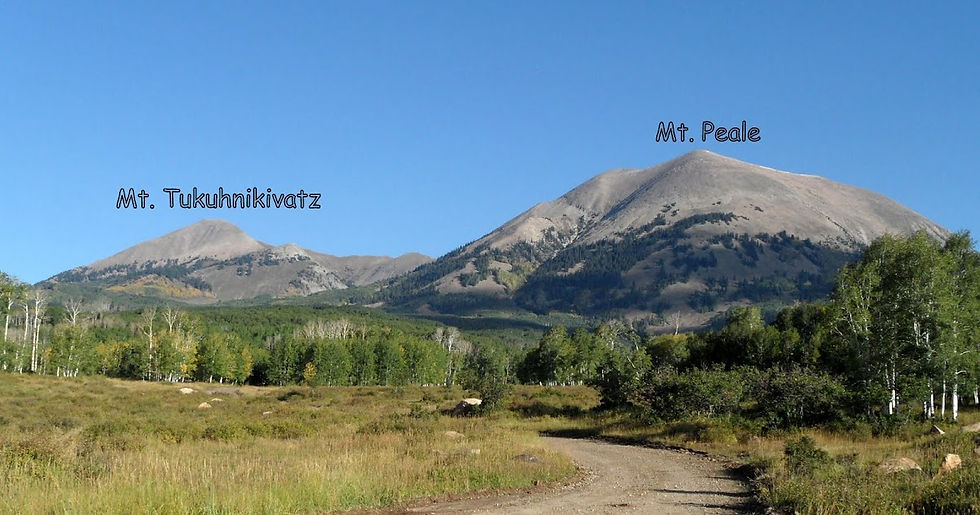
The final push on Mount Tuk is an unrefined scramble over loose, unstable rock — the kind that tests patience more than athleticism.
Three points of contact. On the narrow sections of the ridge, keep two hands and one foot, or two feet and one hand, in contact with the rock at all times. Move deliberately. Test every hold before trusting it with your weight.
Watch for rockfall. When hiking with a partner, stay either close together or far apart on steep sections. A rock dislodged by the person above you can reach dangerous velocity within seconds.
Respect the afternoon storms. The La Sal Mountains manufacture their own weather with startling speed. White clouds can turn black in fifteen minutes. If you see virga — rain that evaporates before reaching the ground — or feel the hair on your arms begin to stand, descend immediately. Ridgelines and open summit slopes are not places to wait out lightning.
The 12:00 PM Rule applies here too. Aim to be off the summit by noon and well below the ridgeline before the afternoon thunderstorm window opens.
Passion as a Compass, Not Fireworks
Duckworth draws a sharp distinction between passion as a spectacular feeling and passion as a consistent direction (Duckworth, Ch. 4). The first kind burns bright and fades. The second kind navigates — quietly, steadily, year after year — like a compass needle that always returns to its true heading regardless of how much the terrain shifts.
Endurance on the Mount Tuk ridge looks like this: you are at the base of the scree field, your legs are already spent from the 1,500 feet below you, and the summit is visible but not close. The enthusiastic hiker looks at that distance and calculates how tired they already are. The gritty hiker looks at the summit and recalibrates their pace — slower, more deliberate, one placement at a time — because they know that endurance is not about having energy to spare. It is about spending what you have wisely enough to finish.
Your Safety Game Plan
Since this is likely your first time navigating the unrefined upper ridgeline of the La Sals, these protocols are not suggestions — they are the difference between a great story and a frightening one.
The Flight Plan: Before you leave Deer Creek Retreat and Old La Sal, tell someone your intended route and expected return time. Leave a note on the kitchen counter if needed. If you are not back by that time, they know to act.
Forest Service Check-In: Check the Manti-La Sal National Forest website for current road and trail conditions before you leave. Mountain access can change overnight.
Emergency Kit: Your pack must include a whistle, a basic first-aid kit for rock scrapes and twisted ankles, and a windproof layer — even if the morning is warm and sunny. Conditions change faster on this ridge than anywhere else in the La Sals.
Know the route before you go: Download an offline topo map through Gaia GPS or AllTrails before you leave — cell service is unreliable once you are on the ridge. Spend fifteen minutes studying the ridgeline and locating the scree field so the terrain does not surprise you when your legs are already tired.
Connecting Mountain & Desert? Equip Your Journey
Whether you're exploring the high alpine passes of the La Sals or ascending exposed canyon shelves, equip your trip with our printable and mobile 12-page companions:
High-Desert Survival Field Guide: Real-world wilderness safety, 1-gallon hydration math, 12:00 PM alpine lightning rules, mountain storm protocols, and off-grid navigation checklists.
Moab Grit Hikes Field Manual: Complete 7-trail tactical guides (Mount Peale, Mount Tuk, Moab Rim, and more), friction-footing rules, Angela Duckworth grit diagnostics, and local trail stories.
The Grit Scale in Your Boots
Angela Duckworth designed the Grit Scale not to judge you but to give you a baseline — a starting point from which to grow (Duckworth, Ch. 4). Your score is not a verdict on your character. It is a map of where you are today. And like any good map, its value lies not in what it tells you about your current position but in what it helps you plan for the journey ahead.
The same is true of this hike. You do not need to be an expert scrambler to summit Mount Tuk. You need to be honest about your current fitness, prepared with the right gear, and committed enough to keep going when the ridge gets narrow and the comfortable option is to turn around. That honesty — the willingness to assess yourself clearly, act on what you find, and keep showing up — is what Duckworth means when she says grit is changeable. You can grow it. But only if you stop pretending you already have it and start doing the work to build it.
Warren Buffett's prioritization principle drives the point home — whether the story about his pilot is precisely accurate or not, the advice is sound: list your top twenty-five goals, circle the five that matter most, and treat everything else as a distraction that dilutes your focus (Duckworth, Ch. 4). The Mount Tukuhnikivatz grit hike is a five-hour version of that exercise. It forces you to care about one thing — reaching the summit safely — and to subordinate every other concern to that singular purpose. When you do that, something clarifying happens. The noise quiets. The decision-making becomes simple. You just move.
That is the aspiration — not just reaching the summit of Mount Tuk, but finishing the race you were called to run, whatever that race looks like in your own life. The mountain is practice. The ridge is a classroom. The scree is a teacher that does not grade on a curve.
The Reward: A View Like No Other

And then you are there.
The ridge flattens into a narrow, wind-swept summit. To the west, the entire Canyonlands maze spreads before you — the Colorado River carving through the Earth far below, the mesas and buttes and canyon walls stretching toward the horizon in colors that shift from rust to amber to deep violet in the afternoon light. To the east, the lush improbability of Paradox Valley — green and quiet and startling against the red rock context that surrounds it. Below you, to the northwest, is Moab — the town that most of your fellow tourists have not left all day, navigating parking lots and waiting in line for shuttle buses and seeing this mountain from thirty miles away.
You are standing on it.
That distinction matters. Not because it makes you superior to anyone — Duckworth would be the first to say that grit is not a competition — but because the gap between seeing something from a distance and standing on it is entirely made of effort. Nobody accidently summits Mount Tuk. Nobody stumbles onto this narrow, rocky top by wandering up from the valley floor. Every single person who has stood here chose to do the work before they left the trailhead. They hydrated, they packed, they studied the map, they started early, they kept moving on the scree when their legs had opinions about stopping. Effort twice. Every time.
The Challenge: Stay at Deer Creek Retreat and Claim the Summit
When you scramble back down the ridge, cross the scree field for the last time, and finally drop back into the aspens with the trail leveling beneath your feet — you are officially a member of what the locals call the Tuk Summit Club. And you earned every letter of that membership.
Here is the best part of where you are staying: you are not going back to a hotel in Moab. You are not navigating an evening traffic jam on US-191. You are not hunting for parking while your knees protest every step of a concrete lot. You are pulling back into Old La Sal and Deer Creek Retreat in minutes. The mountain that tested you this morning is right there in the rearview mirror, glowing in the late afternoon light, looking exactly the way it always has from your basecamp — except now you know what it feels like from the top.
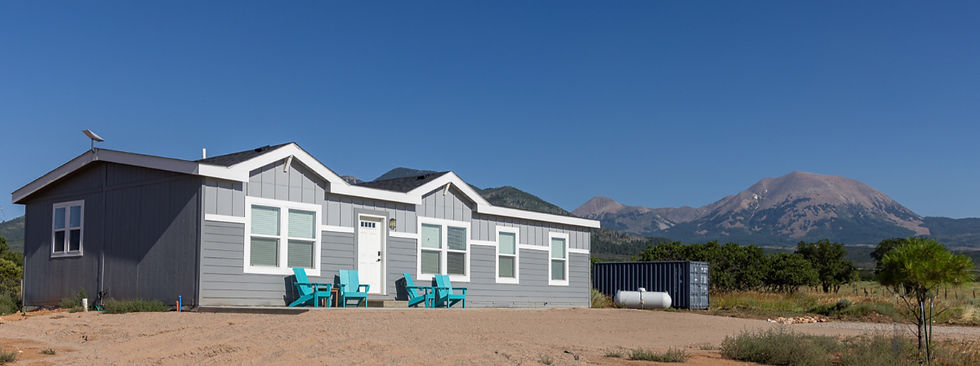
Stay in the main house and recover with space around you — a full kitchen to rebuild your body, a living room to stretch out in, a porch where the silhouette of Mount Tuk sits on the horizon like a trophy you actually earned. Look up at that jagged pyramid in the evening light, cold drink in hand, and feel the quiet satisfaction of someone who answered the question how gritty are you? with their boots instead of their words.

Stay in the tiny home and let the simplicity of the space match the simplicity of what you just did — one trail, one summit, everything else stripped away. The tiny home is for the hiker who already understands that the most meaningful things in life are not complicated. They just require showing up and refusing to stop.
Either way, you wake up tomorrow in the shadow of the mountain you just conquered. The La Sals are still there, unchanged. You are not.
Take the free Grit Scale at GrittyGritGrit.com — see where you are today, and use this hike as the first data point of what is possible when passion becomes a compass and effort counts twice. Then book your stay. The mountain is already watching.
Reserve your stay at Deer Creek Retreat — main house or tiny home — and come discover exactly how gritty you are.
Cheers!
Justin
🥾 The Moab Grit Hikes Series
Mount Peale: Mount Peale Grit Hike: Effort Counts Twice on Southeast Utah's Highest Peak
Mount Tukuhnikivatz: Mount Tukuhnikivatz Grit Hike: How Gritty Are You on Moab's Iconic Skyline Peak?
Portal Overlook: Portal Overlook Grit Hike: Grow Your Grit Above the Colorado River
Moab Rim Trail: Moab Rim Trail Grit Hike: Effort Counts Twice on the Stairmaster
Gold Knob Trail: Gold Knob Trail: Grit, Grace, and the Long Game in the La Sal Mountains
Hidden Valley Trail: Hidden Valley Trail: A Sacred Hike Just "Inside" the Moab Valley Rim
Grandstaff Canyon: Grandstaff Canyon Grit Hike: The Long Obedience That Builds Morning Glory
🎒 Heading out on the trail? Download our Moab & La Sal High-Desert Survival Field Guide for instant mobile and printable access to our 1-gallon hydration formula, 12:00 PM lightning cut-offs, and 10-essential trailhead audits.
About the Author
The author holds a Ph.D. and is an ordained professional chaplain, specializing in the integration of motivation and choice theory, psychological resilience, and pastoral soul care. Transitioning from a ten-year active duty career as a Chaplain in the U.S. Army—where he served within the high-intensity environment of a critical care hospital—his work bridges empirical behavioral science with practical strategies for long-term identity formation. He serves as the primary researcher for grittygritgrit.com, a digital platform dedicated to helping individuals cultivate authentic perseverance through the profound transitions, traumas, and valleys of life. You can explore more of his work and high-mountain-desert writing at deercreeklasal.com.
Works Cited
Brown, Brené. Rising Strong: The Reckoning. The Rumble. The Revolution. Spiegel &
Grau, 2015.
Cox, Catharine Morris. The Early Mental Traits of Three Hundred Geniuses. Stanford
University Press, 1926. Vol. 2 of Genetic Studies of Genius, edited by Lewis M.
Terman.
Duckworth, Angela. Grit: The Power of Passion and Perseverance. Scribner, 2016.


Comments