
Stories by the Campfire: The Red‑Brown Drifter La Sal Mountains
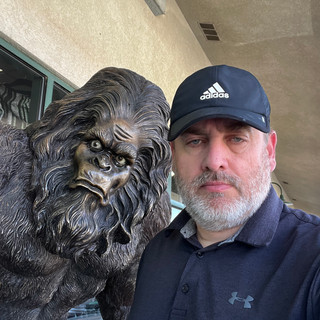
Updated: Jun 20
Long before anyone spoke of the Red‑Brown Drifter La Sal Mountains history kept a close eye on the rustlers and outlaws who ruled the old days up here in Old La Sal. They still talk about those men when they talk about the old days, like the Robbers Roost gang were hiding behind every juniper—bandanas over their faces, rifles in their hands, and lassos tied to their hips. Rustlers are easy to picture, unlike some predator animal in the wild. They look like us, just a little meaner and hungrier. The trouble starts when you run out of human faces to blame.

But there’s another story that floats around the La Sal Mountains, quieter, stranger and mysterious—its the stuff legends are made of. The one about the cattle that didn’t get taken.
They just…disappeared.
The way I first heard it, the tale started with a rancher whose name got worn smooth by retelling. Some say he ran cattle in the late 1800s, others put him just after the turn of the century, riding a skinny bay—one of those reddish‑brown horses with a black mane and tail—along the lower slopes of these same La Sals while the rest of the world pretended to be civilized.
Like any legend, stories shift, change, and sometimes even fade, but the part the old‑timers all agree on is this: he knew his herd.
That old rancher knew which heifers liked to test the fence, which steers would bog down in the creek, which calves would try to slip under the wire. He knew the difference between a cow that wandered and a cow that was gone.
So when cows started going missing without a sound—no blood, no torn‑up sage, just a hole where a steer should have been—he knew the mountains were playing by a different set of rules.
At first, this rancher did what any proud man would do: he blamed himself. Of course, its my fault, he would have said.
He'd think maybe he’d gotten lazy. Maybe he’d miscounted the herd at dusk. Maybe he’d spent too many nights in town and not enough in the saddle. Pride and guilt can braid together fast when your living depends on hooves that don’t come home.
But as the weeks went on and the tally kept coming up short, something under his pride changed and shifted into a feeling of unease. Rustlers, he could fight. Storms, he could ride out. This felt like something else—something that didn’t care whether he believed in it or not.
The Legend of the Red‑Brown Drifter in the La Sal Mountains
The rancher started riding on the range differently and in the process changed his perspective on how how he would protect the cows.

Instead of sticking to the known trails, he cut across draws and climbed higher than he needed to, watching for the usual signs of human trouble—campfire rings that weren’t his, fresh boot tracks, cigarette butts, anything that would point to men instead of ghosts. Each ride was part patrol, part confession. If there was a human hand behind his losses, he was going to find it and set the story straight.
He found nothing.
No outlaw sign. No wagon tracks leading off into some hidden canyon like Robbers Roost. Just the normal scars and whispers of the La Sals—elk trails, old snowmelt, wind pushing through the trees.
The higher he went, the stranger the quiet felt.
Up here, there’s a point where the human noises fall away—no wagons, no roads, just the constant, breathing silence of the mountains. The rancher spent more time in that silence than any man with tired bones really wants to, hat pulled low, jaw set, scanning the slopes while his horse picked its way along game trails.
It was on one of those rides that he noticed it for the first time: a patch of color that didn’t belong.
Reddish‑brown, he’d say later, like old dried blood or the sandstone down near Moab when the light hits it sideways. At first, he thought it was just a shadow thrown by a cloud. The sun does that trick all the time up here, painting one ridge bright and letting another sink into rust.
Then it shifted.
Not much—just a ripple, like something breathing.
His horse felt it before he did. Ears pinned, muscles went tight as wire. His hand went to the rifle out of habit, but some quieter instinct—the same one that heard the missing cows long before the books showed the loss—told him not to move too fast.
The red‑brown patch eased back into the trees and disappeared.
He told himself he’d seen a cow, maybe one of his, maybe a neighbor’s, head down in the brush. Cows wander. Cows get themselves into all kinds of trouble. He said it out loud, just to hear a human voice in the thinning light.
But from then on, he watched the color of the shadows a little more closely.
When the Red Rock Stood Up
The story takes a turn one particular evening late in the summer, when the air can’t decide if it wants to be summer or fall.
Its the perfect setting for a campfire story. The kind of afternoon when the clouds stack up over the high peaks, thinking about doing something dramatic, then drift off like they forgot what it was.
The rancher was riding alone, cutting across a high meadow on the La Sal shoulder.
Below him, the red rock country stretched out toward Moab, catching the last of the sun. The cliffs burned that impossible color, like the whole desert was exhaling light. Above, the tree line darkened into a single, looming band.
He counted his cattle as they moved through the grass: one, two, seven, nine—short again.

His stomach dropped the way it does when you realize the problem you hoped was over has just kept going without you. He opened his mouth to cuss his badluck, but before he could, the herd did something he’d never seen.
They didn’t spook.
They stopped.
Every head turned toward the treeline.
Cows don’t stare at nothing. They watch dogs, horses, people, lightning. They don’t lock onto empty shadows and hold like that.
He followed their gaze.
At first all he saw was the usual: dark trees, fading light, the edge where mountain gives way to sky. Then his eye caught it—the red‑brown color again, but in the wrong place.
It sat halfway between a juniper and a scrub oak, taller than both.

The shape wasn’t crisp; the stories never give you that. It was an outline, a suggestion that the land had decided to stand up and see who was trespassing. Broad shoulders. A long torso. Arms that hung lower than seemed comfortable for a man.
The horse shifted under him, wanting no part of this. His hand slid back to the rifle, fingers wrapping the stock, the old reflex kicking in: trouble appears, you answer with lead. For a heartbeat, he lifted it halfway, sights hovering toward that red‑brown mass.
Then something in him balked.
It wasn’t mercy, exactly. More like the sudden, bone‑deep sense that if he pulled that trigger, he wouldn’t just be shooting at an animal or a rustler—he’d be picking a fight with the mountain itself.
Every rustler he’d ever imagined suddenly felt like a children’s story.
Out here, facing the Red‑Brown Drifter La Sal Mountains legends didn’t feel like a distant campfire tale anymore; it felt like something that had just turned its head and found him.
He couldn’t exactly makeout the face. Maybe that was mercy.
What he could see was the way it moved.
Not like a man sneaking, or a bear pushing through brush. It moved with the slow, quiet certainty of something that didn’t have to rush for anyone.
The cows shifted, but they didn’t bolt. A few lowed, a nervous, questioning sound, as if they were asking permission.
The red‑brown figure paused at the edge of the trees and, just for a breath, seemed to square itself toward the ridge where the rancher sat. There was no roar, no charge—just the heavy awareness of being noticed.
His hands eased. The rifle never made it to his shoulder.
Then, as calmly as a man stepping behind a curtain, the figure slid back into the shadows.
One moment it was there, blending into the slope like an extra stripe of rock; the next, the hillside looked perfectly normal again.
Except for the missing cow.
The rancher sat there longer than he’d admit, listening to his own heart beat up to his ears, caught between two choices: decide he’d imagined it and keep his world small and safe, or admit that the mountains were home to something he didn’t have a name for.
Either way, his herd had already voted.
They’d seen it too.
Shadows with Fur: A La Sal Mystery
He rode down into the meadow later, looking for proof he could put a boot heel on.
He found tracks, but they only made things worse.
Deep impressions pressed into the ground in a pattern that didn’t fit anything he knew—too long for a man, too narrow for a bear, spaced like something that could cross the distance between his horse and the treeline in half the steps.
He crouched beside one print and laid his hand next to it.
His fingers didn’t reach the edges.
For a long moment, the great, stubborn pride that had carried him through droughts and lean winters and one too many arguments in town sat there on his shoulders, waiting for him to laugh this off and go back to blaming rustlers.
He didn’t laugh.
He covered the track with dirt, as if that would bury the question.
He didn’t show it to anyone.
The story says he rode home different that night. Not broken. Not converted into some wild‑eyed prophet. Just…quieter. A man who had finally admitted that his range was not entirely his.
What he did do, from then on, was start watching the slope in a new way.
It wasn’t just about rusty brands and outlaw gangs anymore. The La Sals had their own kind of drifter, something with fur the color of the Utah red rocks that could melt into the land and step out of it again whenever the beast wanted.
The cattle kept disappearing now and then, but never in a way that broke the herd. One here, one there, like something was taking only what it needed, nothing more.
Some folks say that’s just a rancher making peace with losses he can’t explain.
Maybe they’re right.
Or maybe the mountains had their own arrangement with the Red‑Brown Drifter La Sal Mountains lore speaks of—an old understanding that never asked for our vote.
Watching the Treeline from Deer Creek Retreat
These days, the rustlers are mostly gone. The Robbers Roost boys are just names in history books and on weathered signs out in the desert. But the La Sals are still up here, catching storms and holding the line between red rock country and alpine air.
From Deer Creek Retreat, the treeline is more than a backdrop.
It’s a living edge.
On certain evenings, when the sun drops toward the Moab side and the light turns everything copper, you can sit on the porch and watch the shadows lengthen along the slopes. The trees go from green to black. The rocks grab one last glow, then let it go.
Most nights it’s nothing. Your eyes play games. The brain is very good at turning branches into figures and rocks into shoulders when the light gets thin.
But once in a while, guests come back from an evening drive with stories that sound just enough like that old rancher’s to make you sit up straighter.
“We saw something in the treeline,” they’ll say, tracing the hillside with a finger. “Too big to be a deer. Too quiet to be a cow. It moved, and then it didn’t, and then it was just gone.”
They don’t use words like Bigfoot or drifter right away.
They talk around it first—about how their chest felt tight for no good reason, about how the hair on their arms stood up even though the air was still and cool, about how, for one second, they were sure the mountain was looking back at them.
I’m not here to tell you what they saw.
All I know is that in the La Sal Mountains, the shadows don’t just move because of the sun. Sometimes, they have fur.
So if you find yourself at Deer Creek Retreat, staying in the main cabin or the tiny home, some evening, coffee, cocoa or tea in hand, keep one eye on the treeline.
If the Red‑Brown Drifter is still out there, he won’t be in a hurry. He’s been walking these slopes longer than any of us have been telling stories about him.
And if you happen to catch that impossible red‑brown shape in the corner of your eye—just for a second, just enough to make your heart trip over itself—you’ll face the same choice that rancher did on his high meadow:
Shrink the story down until it fits what you already believe.
Or admit that out here, some of the locals don’t carry brands or wear boots.
They just blend into the mountain and keep walking.
All the best!
Justin
About the Author
The author holds a Ph.D. and is an ordained professional chaplain, specializing in the integration of motivation and choice theory, psychological resilience, and pastoral soul care. Transitioning from a ten-year active duty career as a Captain in the U.S. Army—where he served within the high-intensity environment of a critical care hospital—his work bridges empirical behavioral science with practical strategies for long-term identity formation. He serves as the primary researcher for grittygritgrit.com, a digital platform dedicated to helping individuals cultivate authentic perseverance through the profound transitions, traumas, and valleys of life. You can explore more of his work and high-mountain-desert writing at deercreeklasal.com.


Comments