
Finding Grit in the Dark: How Wilderness Solitude Forges Character

Updated: Sep 4
Many travelers head into the high-desert mountain backcountry to experience true wilderness solitude, but few expect how quickly a massive landscape will shatter their false sense of security. While millions flock to the red rock playground of nearby Moab Utah to push their physical limits on the trails, the vast, midnight skies of Old La Sal draw explorers for a different kind of evening and nighttime expedition. It is a place to look outward for cosmic anomalies in our world-class low light pollution, and to track the unfamiliar, rugged contours of the human soul.

When you stand alone on the edge of the porch at Deer Creek, staring up at a stellar canopy so piercingly clear that —believers and nonbelievers alike— frequently hunt for UAPs, the absolute silence quickly transforms from a peaceful luxury into a disruptive psychological mirror. Located just a short, scenic drive away from the high-octane chaos of the national parks, this deep isolation is designed to strip you down to the bedrock.
In a hyper-connected culture obsessed with digital noise, visible output, and social metrics, we have been subtly conditioned to track our personal worth by our daily production and the size of our audience. But when you pack your gear and step into the raw, uncompromising isolation of the La Sals, the external social structures that once validated your position suddenly evaporate.
This sudden absence of background noise triggers an immediate, disorienting collapse of the professional armor you've used to protect your ego, forcing an unavoidable confrontation with the person staring back at you in the dark.
The Academic Framing: Understanding Wilderness Solitude
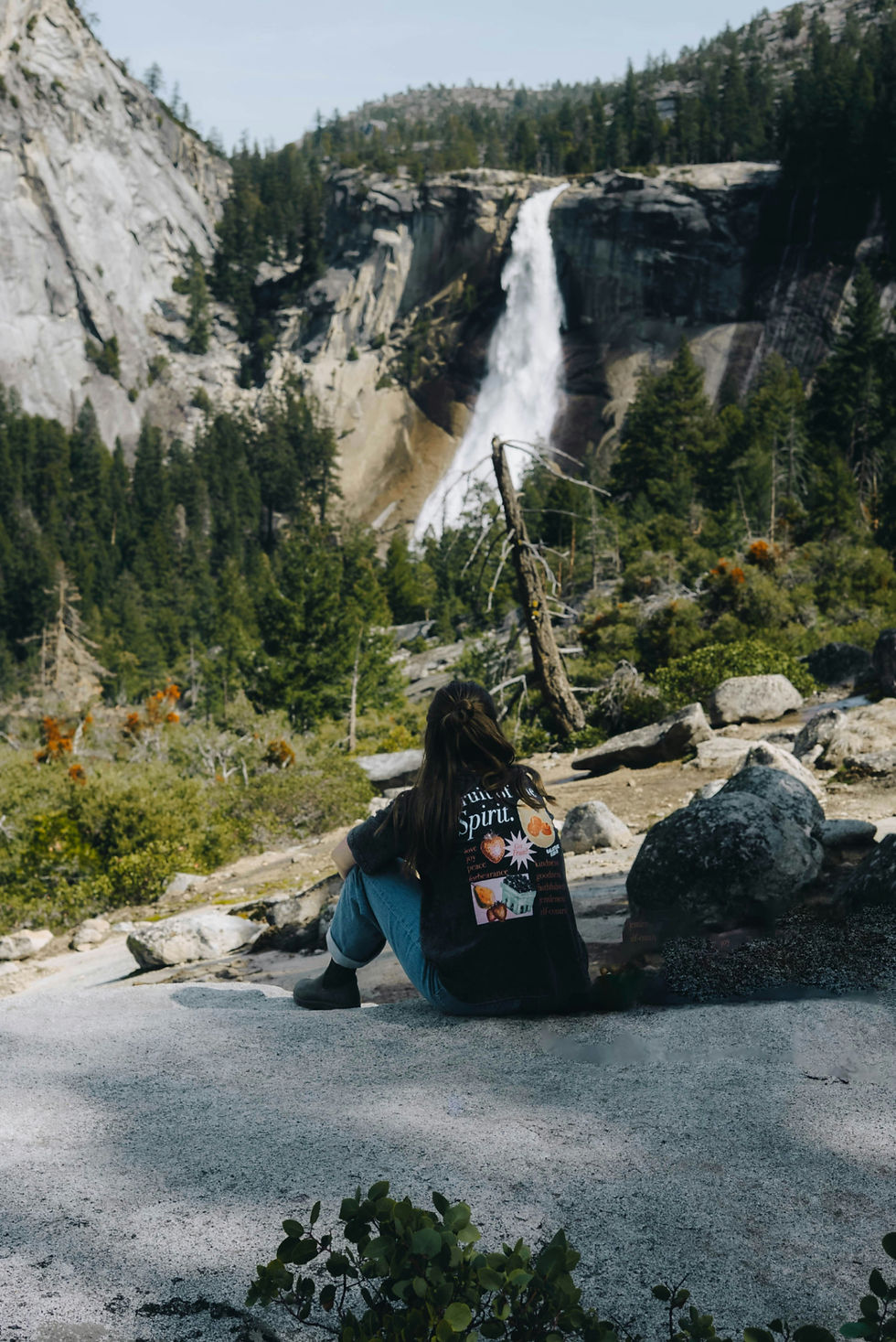
To build an unyielding resolve capable of withstanding systemic life volatility, the human mind requires a specialized environment where defensive ego mechanisms can safely drop away. In everyday social and professional environments, we instinctively engage in what sociologists term "impression management"—the exhausting, subconscious practice of projecting an image of competence, strength, and success to secure validation.
Far from a passive escape, leaning into true wilderness solitude functions as a high-effort psychological laboratory where our core identity is systematically dismantled, analyzed, and rebuilt from the bedrock up. Without an audience to impress or critics to appease, the frantic work of maintaining your performance narrative becomes completely obsolete.
"True transformation does not happen in the crowd. Solitude functions as a necessary psychological container where our defensive ego structures can safely drop away, allowing a resilient, authentic identity to take root." — Dr. Steve L. Porter
In her groundbreaking research on human achievement, psychologist Dr. Angela Duckworth defines grit theory as the sustained combination of passion and perseverance for long-term, meaningful goals. A core component of maintaining this stamina over a lifetime is the concept of deliberate practice—the high-effort, low-delight psychological and physical training required to master a skill or navigate a grueling season of adversity. Duckworth notes:
"How you think about yourself interacts with your environment to determine whether you keep going or give up. Interest is one thing, but sustaining that interest over the long haul requires an underlying conviction of who you are and what you are capable of."
When your identity is tethered exclusively to human performance, external metrics, or social approval, the low-delight phases of life inevitably become existential threats. If a setback occurs, it isn't processed as a minor tactical failure; it feels like a wholesale destruction of your self-worth. To shift from a fragile, performance-based self-concept to an unyielding force of nature, you must step off the performance treadmill and enter the quiet, demanding crucible of the wilderness. It is within this intentional isolation that raw perseverance is upgraded into unshakeable, identity-grounded grit.
The Ancient Blueprint: David’s Wilderness Solitude
Long before modern behavioral scientists mapped the mechanics of resilience, this profound psychological transition from external performance to intrinsic worth was forged in the ancient, high-desert wilderness of Judea (today known as Israel). The life of King David serves as the ultimate historical (Old Testament) case study for how choosing wilderness solitude serves as the foundation for long-term stamina.
The Shepherd’s Isolation and the Stripping of the Armor
Before David ever wore a royal crown, commanded armies, or stepped onto a public battlefield to face the giant Goliath, he was intentionally hidden away in the high-desert pastures as a forgotten shepherd boy. This season of extreme isolation was not a passive waiting room; it was a grueling psychological and spiritual lab. Far from the validation of a crowd or the status of a title, David’s core self-concept was built entirely on intrinsic value and a secure attachment to the divine.
The power of this wilderness identity formation is vividly illustrated when David finally steps onto the public stage to confront his crisis. Before facing the giant, King Saul attempts to strap his own massive, royal armor onto the young boy. This armor was the ultimate representation of worldly metrics—status, human security, and conventional protection. Yet, David immediately strips it off, stating explicitly, "I cannot go in these, because I am not used to them." David recognized that you cannot defeat a giant while wearing a borrowed, performance-based ego. He chose instead to stand completely exposed, relying entirely on the raw, intrinsic confidence he had forged during years of quiet isolation.
The Ballast of Constancy through the Troughs of Life
David’s unshakeable stamina wasn't fueled by a fragile, performance-driven narrative; it was sustained by an internal ballast line anchored during those lonely years in the desert. When he eventually faced systemic volatility—from the murderous jealousy of King Saul to the heartbreaking military betrayals of his own family—he did not break.
Throughout his life, David experienced massive oscillations between the highest peaks of public success and the deepest, darkest troughs of isolation, hiding in lonely caves like Adullam. Yet, because his identity had been forged in the silence, his sense of self did not fluctuate with his circumstances. He did not persevere to prove his worth to a watching world; he persevered because he was already deeply grounded.
The Deer Creek Mirror: Tectonic Identity Formation
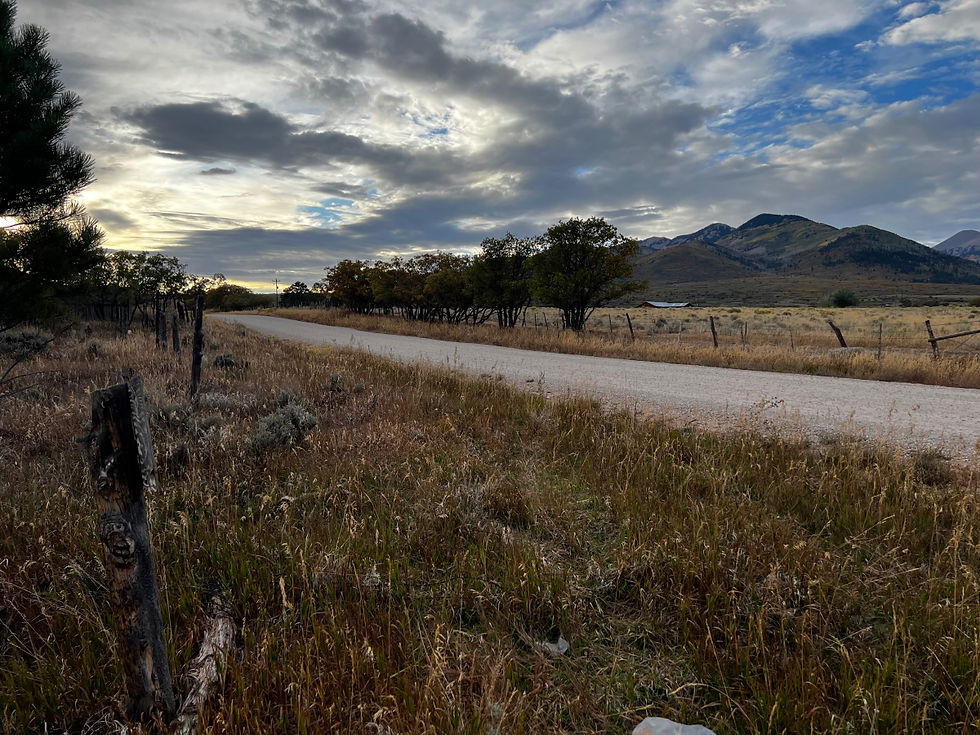
If you look out the window of our cabin at the Old La Sal landscape, you will see this exact psychological process written directly into the ancient geology of the earth. The high desert does not coddle the viewer; it demands an awakening to reality.
1. The Shaking and Fracture of the False Self
Just as catastrophic tectonic forces and immense volcanic upheavals rapidly carved Haystack Rock (La Sal Mountains) into something completely unshakeable, standing alone in this massive, historic landscape forces your fragile, superficial ego structures to fracture. When you sit on the porch in the main cabin or the seating area outside the tiny home under a pitch-black night sky, searching the cosmos for anomalous lights or tracking the slow rotation of the Milky Way, the sheer scale of the created universe humbles the ego.
The artificial lights of the city act as a psychological sedative, keeping us distracted from our inner world. But in the zero-light-pollution environment of Old La Sal, the darkness strips away those distractions. The sudden silence forces an intense, unavoidable confrontation with your deepest anxieties, failure loops, and hidden insecurities. This is the "low-delight" phase of spiritual and psychological formation. You must allow the false, performance-driven self to fracture before the resilient, authentic self can be born.
2. Shifting to an Antifragile, Secure Identity
When quiet, intentional self-reflection grounds your core identity in intrinsic value rather than what you produce, your capacity to handle life's hardships scales exponentially. In the framework of grit theory, a secure identity acts as a psychological ballast. It keeps your mind steady when the unexpected storms of volatility hit your business, your career, or your family.
Consider the contrasting dynamics of how these two identities function under pressure:
Performance-Driven Resilience: This state of mind is driven by an underlying fear of inadequacy. It views quiet as a threat to status because when the production stops, the worth drops. It is incredibly fragile, meaning that when a major setback occurs, the individual's entire self-worth is shattered.
Identity-Grounded Grit: This state of mind is fueled by deep internal conviction. It views quiet as a primary source of power and calibration. It is completely antifragile, meaning that failures and setbacks do not destroy the individual; instead, they serve as the exact raw material that refines and strengthens their resolve.
Like the towering peaks of the La Sal mountains standing firm against centuries of systemic weathering, an identity forged in solitude develops a rare, deep-seated constancy. Your self-worth ceases to be a volatile variable tied to public opinion, financial metrics, or professional accolades. Instead, it becomes a fixed constant. When failure is no longer an existential threat to who you are, you gain the psychological freedom to take bold risks, endure prolonged hardship, and maintain your stamina over the long haul.
⚡ The Grit Check
This week’s tactical execution: Set a timer for 20 minutes, turn off all digital notifications, leave your phone in another room, and sit in absolute silence with nothing but a blank notebook and a pen.
When the initial anxiety spikes—or when your brain begins screaming at you to check your metrics, answer emails, or optimize your schedule—do not leave the room. Embrace the low-delight discomfort of the quiet.
Once your mind clears, write down the primary narrative you typically use to justify your worth to the world. Ask yourself honestly: If this specific role, title, or achievement was permanently stripped away tomorrow, who is the person left sitting in this chair?
Field Manuals: Raw Independence on the Trail & Porch
Stripping away external armor requires being thoroughly prepared for both the physical elements and the internal silence. Before facing your own wilderness crucible in the La Sals, download our Moab & La Sal High-Desert Survival Field Guide for instant access to hydration math, thermal prep, slot canyon safety, and trailhead checklists—or pair your expedition with The Solitude Lab Field Companion to master the 20-minute cognitive containment protocol and forge an unshakeable identity beneath unpolluted dark skies.
Find Your Crucible at Deer Creek

True deep work—both professionally, creatively, and psychologically—requires strict physical boundaries that actively shield your mind from modern digital saturation. If your daily calendar is packed with back-to-back demands and your mind is constantly flooded with notifications, you are actively starving your identity of the environment it requires to mature. You cannot build deep, unyielding grit while remaining completely immersed in the noise of the crowd.
The physical layout of our cabin property at Deer Creek in Old La Sal is intentionally engineered to serve as your personal identity ballast line. Offering zero light pollution, sweeping panoramic views of the La Sal peaks, and absolute privacy from the grid, it provides the ultimate destination for deep wilderness solitude.
Whether you come to sit under the vast, untamed starry sky to search the cosmos for the unknown, or to step into the quiet to confront the unfamiliar spaces of your own mind, this landscape demands absolute authenticity. Here, the noise of the busy world fades away, allowing you to step off the performance treadmill and safely confront the quiet. Like the young shepherd boy David standing on the battlefield, this is your invitation to drop the heavy, borrowed armor of King Saul—the suffocating expectations, titles, and metrics of other people—and face your own Goliaths in your valleys of Elah with nothing but the raw, unshakeable identity you have forged in the wilderness.
Ready to test your grit under a sky that actually watches back? Check the calendar for the Main Cabin or Tiny Home and book your solitude laboratory time today!
Cheers!
Justin
🌌 The Solitude Lab Series
Part 3 (Act III): The Gift of Surrender: Dropping Your Guard on the Mountain Porch
Part 6 (Series Finale): Intentional Solitude vs. Loneliness: Forging Grit beneath a Starry Sky
About the Author
The author holds a Ph.D. and is an ordained professional chaplain, specializing in the integration of motivation and choice theory, psychological resilience, and pastoral soul care. Transitioning from a ten-year active duty career as a Chaplain in the U.S. Army—where he served within the high-intensity environment of a critical care hospital—his work bridges empirical behavioral science with practical strategies for long-term identity formation. He serves as the primary researcher for grittygritgrit.com, a digital platform dedicated to helping individuals cultivate authentic perseverance through the profound transitions, traumas, and valleys of life. You can explore more of his work and high-mountain-desert writing at deercreeklasal.com.
Works Cited
Crabb, Larry. Inside Out. NavPress, 1988.
Duckworth, Angela. Grit: The Power of Passion and Perseverance. Scribner, 2016.
Porter, Steve L. "The Psychology of the Desert: Solitude as a Container for Identity Formation." Journal of Spiritual Formation and Soul Care, vol. 12, no. 2, 2019, pp. 145-162.
The Holy Bible. English Standard Version, Crossway Bibles, 2001. 1 Samuel 17.



Comments