
Quiet of Old La Sal: Why Mountains Endure While Roads Shift

Updated: Aug 18
When you turn off Highway 191 and ascend into the elevated basin lying beneath the massive peaks of Mount Peale and Mount Tukuhnikivatz, entering the quiet of Old La Sal reveals an ancient perspective on time, movement, and human endurance.
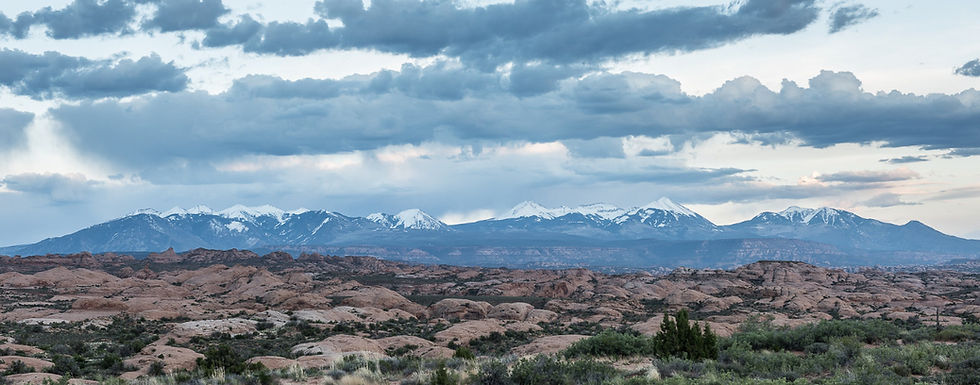
In our fast-paced modern culture, we live in a world defined by restless motion. Highways are constantly expanded, bypasses are carved out, digital feeds refresh every second, and popular travel destinations transform into high-energy hubs of commercial activity. We spend our days managing continuous inputs, reacting to urgent notifications, and moving through landscapes at sixty miles per hour. We have grown accustomed to ambient traffic hums, artificial light, and constant sensory stimulation, often forgetting what true, unbroken silence feels like in our bones.
When you step out onto the porch at Deer Creek Retreat after the sun drops behind the western sandstone ridges, the world undergoes a sudden, dramatic transformation.
The distant hum of highway traffic fades to absolute zero. The intense heat of the canyon floor gives way to a crisp, mountain-scented breeze filtering down through the quaking aspens. Above, unpolluted by city glare, thousands of stars emerge across an unbroken black sky.
As we conclude our five-part series, Ancient Roads & Forgotten Passes, we return to the place where every journey begins and ends: the high-altitude basin of Old La Sal. Why have human beings sought refuge in this elevated valley for thousands of years? How do ancient mountains anchor our restless modern minds? And what can the enduring stillness of this landscape teach us about living with intention?
Historical Eras of Old La Sal: The Changing Basin
To understand the quiet of Old La Sal, one must look at how human presence in this high-altitude basin has shifted and evolved across distinct historical eras while the underlying landscape has remained completely unchanged.

The basin beneath the La Sal Mountains has served as a strategic high-desert refuge through four major chapters of human history:
1. The Ancient Post-Dispersal Era
Long before written records existed or paved roads were cut, early family groups and indigenous hunters recognized the unique geographical advantages of the Old La Sal basin. Situated above the scorching heat of the Moab Valley floor and fed by permanent mountain streams like La Sal Creek and Deer Creek, the basin offered abundant game, fertile soil, thermal rock alcoves, and cold spring water. It served as a vital summer camp and a strategic staging area before crossing Geyser and La Sal Passes. Early family units gathered seeds, processed hides, and rested in these sheltered pastures before winter snows choked the upper ridges.
2. The Trade Corridor & Pioneer Era
During the early 1800s, commercial pack trains traveling the Old Spanish Trail utilized the La Sal foothills as a critical resting zone. The rich mountain pastures allowed working pack mules to gain weight and recover before facing the waterless stretches of the western deserts. Later, in the late nineteenth century, early cattle ranchers and homesteaders established permanent agricultural ranches in Old La Sal, building timber cabins, planting hardy apple orchards, and utilizing high-country meadows for summer livestock grazing. They learned to live by the rhythms of the mountain seasons, storing ice from winter ponds and gathering firewood before autumn storms sealed the high passes.
3. The Mining & Boomtown Transitions
As mineral discoveries shifted across southeastern Utah—from early gold prospecting in high mountain cirques to the mid-twentieth-century uranium boom—roads were carved, heavy machinery was hauled over high passes, and populations surged in nearby valleys. Yet, while boomtowns grew and faded along major river corridors, Old La Sal retained its fundamental character as an agricultural and pastoral mountain basin. The temporary noise of boom-and-bust economic cycles washed over the region, but when the dust settled, the quiet pastures of the basin returned to their timeless baseline.
4. The Modern Sanctuary Era
Today, as downtown Moab has developed into a bustling international hub for outdoor recreation and tourism, Old La Sal stands as a quiet, protected sanctuary. It remains an elevated mountain retreat where visitors can step off the crowded tourist grid, experience true dark skies, and reconnect with the timeless rhythms of the natural world.
While human technology, transportation routes, and economic priorities have shifted repeatedly over centuries, the massive quartzite peaks above the basin have remained completely unchanged. Roads shift, boomtowns come and go, but the mountain endures.
The Geography of Solitude: Why the Basin Preserves Stillness
The quiet of Old La Sal is not an accident of geography—it is a physical reality created by the unique topography of the La Sal Mountain range.
Rising dramatically out of the surrounding desert floor, the La Sals form an isolated mountain island in the sky. Standing at an elevation above 6,000 feet, the basin of Old La Sal sits in a high-altitude bowl protected on three sides by towering peaks and high ridge lines:
The Eastern Shield: The massive shoulder of Mount Peale and the high ridge of Geyser Pass block eastern weather patterns and shield the basin from low-elevation basin noise.
The Alpine Catchment: The high peaks catch prevailing moisture, funneling pure mountain snowmelt down through La Sal Creek and Deer Creek and feeding permanent springs that nourish lush mountain grasses.
Thermal Inversion and Clean Air: Because the basin sits significantly higher than the Moab Valley floor, it escapes the stagnant heat inversions of the lower desert. Thermal mountain winds flush cold, clean air down through the canyon every evening, clearing out moisture and dust.
This unique combination of high elevation, mountain barriers, and natural water catchments created a geography of solitude that early travelers relied upon for survival—and that modern visitors rely upon for mental recovery.
The Quiet of Old La Sal: An Anchor in a Restless World
Why does spending time in a quiet mountain basin feel so deeply restorative to a tired mind?
Psychologists, researchers, and pastoral counselors who study human resilience often emphasize the concept of environmental anchors. An anchor is a physical space or experience that forces your mind to slow down, step out of chronic hurry, and regain a sense of proportion.
When you spend your weeks managing complex work schedules, navigating heavy traffic, and responding to constant digital demands, your nervous system operates in a state of continuous, low-grade hyper-vigilance. You become accustomed to looking at life through a narrow lens of immediate deadlines and urgent tasks.
Standing in the quiet of Old La Sal breaks that cognitive trap. When you look up at peaks that have stood firm through generational shifts, post-dispersal human migrations, Spanish trade caravans, early pioneer settlements, and modern boomtowns, your personal timeline gently recalibrates. You are reminded that the immediate deadlines consuming your mental energy are temporary, while the earth created beneath your feet is enduring.
The Quiet of Old La Sal: Biological and Neurological Recovery
The stillness experienced in Old La Sal is not merely a pleasant psychological feeling—it triggers a direct, measurable physiological recalibration across your entire nervous system:
1. Acoustic Recovery & Amygdala Deactivation
In modern urban environments, your brain's auditory cortex works constantly to filter out low-frequency human noise: traffic rumble, HVAC systems, sirens, aircraft, and electrical hums. Even while you sleep, your amygdala monitors these background sounds for potential threats. In the deep quiet of Old La Sal, ambient noise drops to near absolute zero decibels. This absence of artificial noise signals directly to the brain that it is safe to drop hyper-vigilance, allowing your nervous system to shift from sympathetic (fight-or-flight) drive into parasympathetic (rest-and-repair) dominance.
2. Circadian Sync Under True Dark Skies
Artificial blue light pollution suppresses natural melatonin production, fragmenting deep REM sleep cycles. Sitting at an elevation above 6,000 feet far from city lights, Old La Sal experiences complete, unpolluted dark skies. As twilight fades, your pineal gland naturally releases melatonin in sync with the environment, promoting the kind of deep, unbroken sleep that restores mental clarity and physical energy.
3. High-Altitude Atmospheric Reset
The combination of thin mountain air, low humidity, and pine-rich air encourages slower, deeper diaphragmatic breathing. This increased oxygen efficiency stimulates the vagus nerve, slowing heart rate, reducing blood pressure, and easing chronic muscle tension in the neck, jaw, and shoulders.
Attention Restoration: What Ancient Peaks Teach Modern Minds
Environmental psychologists who study human cognitive performance rely on Attention Restoration Theory (ART) to explain how natural environments heal mental fatigue.
In daily digital life, modern humans consume almost all their mental energy using directed attention. Every time you reply to an email, manage a complex schedule, process work assignments, or navigate urban traffic, you draw from a finite pool of mental focus. Over time, draining this pool leads to cognitive exhaustion, brain fog, irritability, and stress.
When you spend time in the high desert beneath the La Sal Mountains, your mind shifts effortlessly into soft fascination:
Effortless Focus: Watching the golden evening light paint the eastern face of Mount Peale or listening to the mountain breeze sweep through the aspens requires zero cognitive effort.
Cognitive Space: In the absence of constant digital prompts and notifications, your mind has the room to process unedited thoughts, reflect on long-term goals, and gain creative insight.
Perspective and Scale: Gazing up at a mountain range that has stood firm through thousands of years of human history gently reminds us that our daily anxieties and frantic schedules are temporary, allowing us to regain emotional balance.
The Four Lessons of the High Passes
As we conclude this series, the history and geography of the La Sal mountain passes leave us with four timeless principles for daily living:
Respect the Terrain: Early travelers knew that speed meant nothing if you ignored the reality of the weather or the mountain. True resilience requires recognizing your limits, preparing carefully, and pacing yourself for the long journey.
Carry the Light: When blizzards swept across Geyser Pass and visibility dropped to zero, ancient scouts relied on small sparks, shared warmth, and proven trails. In times of personal uncertainty or trial, holding onto core values and guiding relationships keeps us grounded.
Respect the Seasons: You cannot cross a high alpine pass in the middle of a winter blizzard, nor can you rush the spring thaw. Life moves in seasons; learning when to push forward and when to rest is the foundation of endurance.
Return to the Quiet: No matter how far early traders traveled across the dry, sun-baked desert, they always returned to the high basin water and shade to recover. We all need a quiet sanctuary where our spirits can reset.
🎒 Exploring Ancient Passes & Desert Trails? Get the Field Guide
Heading off the paved roads to explore historic passes or remote high-desert canyons? Download our complete Moab & La Sal High-Desert Survival Field Guide ($2.99). This bundled download includes our 1-gallon hydration formula, 12:00 PM alpine lightning rules, slot canyon flood protocols, and 10-essential trailhead audit checklist. Includes both a full-color mobile PDF for your phone and an ink-friendly printable edition for your daypack.
A Challenge to You: Claim Your Sanctuary at Deer Creek Retreat
The experience of the quiet of Old La Sal was not meant to be read about on a screen and forgotten. It was meant to be felt in the still mountain air.
When you leave the traffic, heat, and busyness of downtown Moab behind and ascend into the elevated basin of Old La Sal, the atmosphere changes instantly. The air cools, the noise fades, and the immense scale of the La Sal Mountains takes over.
At Deer Creek Retreat, we offer two distinct, off-grid sandboxes designed specifically to give you a front-row seat to the majesty of this mountain landscape:

The Main Cabin
If you are traveling with family, a group of friends, or a retreat team, the Main Cabin provides an expansive, comfortable sanctuary. Gather around the full kitchen to prepare meals, relax in the spacious living room, or spend your evenings on the porch watching the twilight colors shift across the high peaks of Peale and Tukuhnikivatz.
The Tiny Home
For solo travelers, couples, or anyone seeking a minimalist digital detox, the Tiny Home offers an intimate, deeply restorative footprint. Lean back in the reclining chairs on your private gravel seating area, watch the dark sky come alive with stars, and fall asleep under skylights framing the mountain skyline.
Your Challenge: Step off the busy highway and come experience the grounding quiet of Old La Sal for yourself. Whether you stay in the spacious comfort of the Main Cabin or the minimalist peace of the Tiny Home, book your stay at deercreeklasal.com and let the timeless stillness of this mountain retreat reset your spirit.
Cheers,
Justin
🏔️ The Ancient Roads & Forgotten Passes Series
Part 5: The Quiet of Old La Sal: Why Mountains Endure While Roads Shift
🎒 Exploring Ancient Passes & Desert Trails? Download our Moab & La Sal High-Desert Survival Field Guide ($2.99) for instant mobile and printable access to our 1-gallon hydration formula, 12:00 PM lightning cut-offs, and 10-essential trailhead audits.
About the Author
Justin holds a Ph.D. in Education and is an ordained professional chaplain, specializing in the integration of motivation and choice theory, psychological resilience, and pastoral soul care. He previously served ten years on active duty as a U.S. Army Chaplain in military training, field environment and a critical care hospital, where he learned to sit with people in their deepest valleys and darkest nights. He is the primary researcher and writer for grittygritgrit.com, a platform focused on perseverance, identity formation, and growth through adversity. Explore more reflections, high-desert writing, and lodging resources at deercreeklasal.com.


Comments