
The Lantern on Geyser Pass: A La Sal Pass Historical Story

Updated: Aug 18
The wind coming off the high ridge did not howl; it hissed through the yellowed, trembling aspen leaves with a sharp, dry rasp that smelled unmistakably of impending snow.
From the western lip of the basin, looking down toward the vast red sandstone benches where the town of Moab would one day sit, the sky was still a pale, bone-white blue. The sun, sitting low in the autumn arc, cast long, amber shadows across the sagebrush flats. But higher up, where the jagged quartzite shoulder of Mount Peale met the dark, dense timberline of Haystack Mountain, the clouds had turned the color of bruised slate. They moved not with the casual drift of fair-weather vapor, but with the heavy, rolling momentum of a true high-altitude cold front.

Jareth stood on a flat shelf of conglomerate rock, his right hand resting on the smooth, hand-carved wood of his walking staff. He was thirty-two years old, but his knees carried the stiff, dull ache of a man who had spent two decades packing heavy loads over the high, unpaved passes of southeastern Utah. His lungs, conditioned by years of high-desert travel, drew in the thin mountain air with quiet, rhythmic discipline.
Behind him, resting in the sheltered lee of a dense stand of subalpine fir, seven people waited in silence for his signal.
If you are looking for a La Sal Pass historical story that captures the raw, unvarnished reality of early human movement through these mountains, you have to understand one fundamental truth: in the high desert, seasonal timing was everything.
High-Pass Timing | Risk Factor | Survival Impact |
Stay Too Late | Sudden Alpine Blizzards | Trapped above tree line; frozen water and severe hypothermia |
Cross Too Early | High-Altitude Scarcity | Scarce summer game; frozen high-altitude springs |
The Narrow Window | Perfect Seasonal Balance | Safe high-pass transition before winter seals the mountain |
The autumn of that year had been uncommonly warm and forgiving. The family group had stayed late in the high meadows of the eastern basin near the Paradox Valley, harvesting wild seed, drying deer meat over low, smokeless willow fires, and carefully softening hides with marrow fat for the coming cold. But the La Sal Mountains do not negotiate with human schedules or comfort. When the high-altitude weather shifted, it changed in hours, not days.
Now, standing at the eastern approach to Geyser Pass, Jareth faced the exact logistical choice that every ancient scout before him had faced: risk the high, exposed pass in the face of a gathering storm, or turn back to the eastern lowlands and risk being caught in the open without adequate wood or permanent water.
He turned toward the timber and whistled—a low, two-note call that mimicked the mountain quail.
The Logistical Reality of Post-Dispersal Movement
To modern minds accustomed to lightweight nylon tents, synthetic insulation, and freeze-dried meals, early wilderness travel is often romanticized. We imagine swift, unencumbered hunters gliding effortlessly across the landscape.
The historical reality of an early post-dispersal family group moving through the La Sals was vastly different. It was a heavy, calculated logistical operation:
The Weight of Survival: The group carried everything they owned on their backs. Dried meat wrapped in hide, heavy stone-milling slabs, bone awls, sinew thread, spare moccasins, and precious clay containers of seed weighed heavily on adult shoulders.
The Vulnerability of the Young and Old: A family unit moved only as fast as its slowest member. Jareth’s mother carried the weight of years in her hips, while Kael’s eldest child was barely six years old.
The Constant Caloric Math: At an elevation above 9,000 feet, the human body burns calories at nearly double its normal rate simply to maintain core body temperature. Every hour spent lost or delayed on a mountain pass consumed precious energy reserves that could not be easily replaced.
Jareth knew that if they turned back east toward the lower basin, they would burn three days of food merely retreating. If they pushed ahead and crossed the pass before the gap choked with snow, they would descend into the sheltered sandstone alcoves of the western washes, where winter game was plentiful and thermal rock overhangs provided natural protection.
A La Sal Pass Historical Story: Crossing Geyser Pass in the Whiteout
His younger brother, Kael, emerged first from the shadow of the firs. At nineteen, Kael moved with the restless, impatient energy of youth, his shoulders broad under a heavy mantle of tanned deer hide. He carried a bundle of hardwood spear shafts slung across his back, his eyes darting continuously toward the darkening sky above the ridge.
Behind him came their mother, carrying a tightly bound bundle of dry willow bark and pine pitch—their emergency fire starter—followed by Kael’s wife and their three young children. The children did not cry or complain; they had been raised in a world where quiet obedience on the trail was a prerequisite for staying alive.
"The air is turning sour," Kael said, stepping onto the stone shelf beside his brother and looking up at the slate-gray clouds hanging over the gap. "The smell of iron is in the wind. If we stay in this timber, the night will freeze us before we can build a dry shelter."
"If we cross the pass and the blizzard catches us above the tree line, there is no wood to burn," Jareth replied, his voice calm, deliberate, and measured. "We move now, but we move as one body. No one strays from the trail to hunt. No one stops to rest until we hit the western spruce line."
They began the steep, upward climb.
Elevation Zone | Terrain & Vegetation | Elevation Range |
01. Low Basin | Piñon Pine & Juniper Belt | 6,000–7,500 ft |
02. Mid-Mountain | Quaking Aspen Groves | 7,500–9,000 ft |
03. Upper Timber | Engelmann Spruce & Subalpine Fir | 9,000–10,000 ft |
04. The Saddle | Exposed Alpine Pass | 10,500+ ft |
The trail through Geyser Pass was not a paved road or a groomed dirt track; it was a narrow, deeply worn game groove cut into the mountain by centuries of elk, deer, and human feet. It wound upward through dense stands of Engelmann spruce, where the forest floor was dark and damp, thick with the heavy, resinous scent of fallen needles and wet earth.
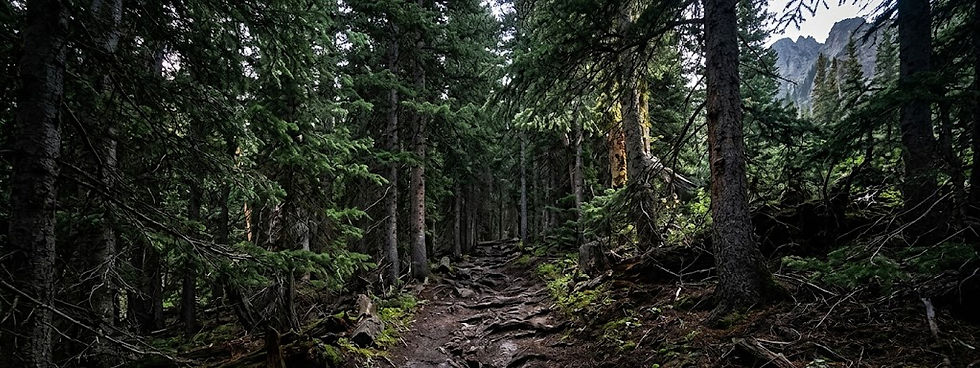
As they gained elevation, the ground beneath their rawhide-soled moccasins changed. The soft, needle-covered duff gave way to cold quartzite gravel, and then to a thin, powdery dust that had begun to freeze into a hard, slippery crust.
Halfway to the saddle, the first wave of the storm struck.
It did not arrive as soft, floating snow. It came as a sudden, violent squall—hard, stinging grains of graupel that rattled against their leather packs like handfuls of dry river gravel. The wind coming through the narrow notch of the pass picked up immense speed, driving the cold deep into their wool and hide wraps.
Jareth kept his climbing pace strictly controlled, resisting the natural impulse to sprint upward. He knew that in high-altitude mountain travel, sweat was the ultimate enemy. If a climber pushed too hard on a steep gradient and soaked their inner garments with perspiration, the moment they stopped moving at the top, that trapped moisture would conduct heat away from the body, causing rapid hypothermia.
"Keep the children between us!" Jareth called back over his shoulder, his voice barely carrying over the roar of the wind through the high canopy. "Watch the timberline! When the trees shorten, step close!"
The Crossing at 10,500 Feet
By late afternoon, the towering spruce trees began to dwarf into gnarled, wind-bent krummholz—stunted timber that signaled the absolute edge of the tree line.
A hundred yards further, they broke out onto the open, exposed saddle of Geyser Pass—a high, wind-swept notch standing at over 10,000 feet above sea level. To their left, the massive north face of Mount Peale rose into the cloud bank, its high talus fields lost in a churning wall of white fog. To their right, the steep slopes of Haystack Mountain bowed toward the pass, channeling the gale-force winds like a giant natural funnel.
Here, above the protection of the forest, the full force of the mountain storm hit them without mercy.
The world turned completely white. The distant views of the sandstone canyons vanished, replaced by a blinding, disorienting void where sky, mountain, and ground merged into a single field of howling gray. The temperature dropped precipitously, biting at exposed cheeks and instantly freezing the moisture on their eyelashes.
In that moment of total whiteout, Kael stopped in his tracks, turning in a frantic circle as the wind tore at his hide mantle.
"Which way to the western wash?" Kael shouted, panic cutting through his voice for the first time. "I can't see the ridge line! The mountain is gone!"
Jareth stepped forward through the drifting snow, grabbing his brother's shoulder with a firm, unyielding grip that grounded him.
"Look down," Jareth commanded quietly, leaning close so his voice could be heard beneath the wind. "Don't look at the sky. Look at the rock."
Even when the mountain skyline was swallowed by storm clouds, the trail remained. Embedded in the high pass were the subtle, permanent markers left by generations of travelers: a specific arrangement of stacked quartzite stones, a smooth shelf of sandstone polished by thousands of passing feet, and the deep, centuries-old groove cut into the earth that no single blizzard could erase.
Jareth pulled a small, tallow-soaked torch from his pack—the simple high-desert equivalent of a lantern—and struck a piece of dark chert against a hard, iron-rich stone. A shower of bright, yellow sparks caught the dry cedar tinder, and a small, stubborn amber flame flickered into life inside his cupped hands.
Holding the dim light low against the snow-dusted rock, he led the family across the open saddle. Step by step, deliberate and unhurried, they crossed the highest point of the pass.
The Western Descent and the Fire in the Basin
An hour later, the trail began its long, welcome drop down the western flank of the La Sals.
As they descended beneath the 9,000-foot level, the gale-force winds above slowed to a steady mountain breeze. The blinding snow turned back into a quiet, falling sleet, and then into a cool, high-desert rain. The dense spruce forest gave way to scattered stands of quaking aspen, their pale bark glowing like ghost pillars in the fading twilight.
Below them, spreading out into the darkening basin, lay the quiet, sheltered benches of Old La Sal.
They made camp under the deep overhang of a massive sandstone alcove—a natural rock shelter that had protected traveling families for centuries. Kael built a small, hot fire using dry juniper heartwood from the shelter’s floor, while their mother unwrapped the dried meat and passed it around.
The children, warm and fed, collapsed onto a bed of dry pine needles, their breathing slowing into the deep, peaceful sleep that only comes after total physical exhaustion.
Kael walked to the mouth of the alcove, looking back up toward the high mountain pass they had crossed just hours before. Up on the ridge, the storm was still raging, a dark, churning mass of clouds locking the summit in ice.
"If we had waited another day..." Kael murmured, shaking his head slowly.
"The pass is closed now," Jareth said, stepping up beside his brother and leaning on his staff. "The snow will sit on Geyser Pass until the spring sun thaws it. But we are down. The land held us."
He looked out across the quiet basin toward the western horizon, where the dark silhouettes of the sandstone fins stood silent under a blanket of clearing stars.
"The mountain doesn't give you safe passage because you are fast," Jareth added softly, watching the firelight flicker against the ancient rock walls of the shelter. "It gives you safe passage because you respect the trail, you carry the light, and you refuse to quit when the storm turns white."
The Legacy of Persistence: What High Passes Teach Us
This La Sal Pass historical story is fictional in its specific characters, but it is entirely historical in its truth.
For generations, the men and women who navigated the high passes of the La Sal Mountains operated under the absolute law of persistence. They understood that safety and success were not guaranteed by strength alone, but by a deep, unshakeable respect for the terrain, careful preparation, and the willingness to take the next deliberate step even when the visibility dropped to zero.
When you explore the backroads and mountain passes surrounding Moab today, it is easy to forget the human story carved into these rocks. We drive up Geyser Pass Road in modern four-wheel-drive vehicles with heated seats and digital temperature displays, treating the drive as a pleasant afternoon diversion.
But the mountain remembers.
The same peaks that watched over Jareth and his family as they crossed the storm-swept saddle of Geyser Pass watch over the basin of Old La Sal tonight. The same deep, unbroken silence that settled over their alcove fire settles over the porch at Deer Creek Retreat when the sun goes down.
When you step out onto the porch after dark and look up at the dark silhouette of the La Sals cutting into the starry sky, you are standing on historical ground. You are witnessing a landscape that has tested human endurance, protected traveling families, and offered sanctuary from the storms of life for thousands of years.
Exploring Ancient Passes & Desert Trails? Get the Field Guide
Heading off the paved roads to explore historic passes or remote high-desert canyons? Download our complete Moab & La Sal High-Desert Survival Field Guide ($2.99). This bundled download includes our 1-gallon hydration formula, 12:00 PM alpine lightning rules, slot canyon flood protocols, and 10-essential trailhead audit checklist. Includes both a full-color mobile PDF for your phone and an ink-friendly printable edition for your daypack.
A Challenge to You: Claim Your Sanctuary at Deer Creek Retreat
The stories of high-desert persistence were not meant to be read quickly on a glowing screen and forgotten. They were meant to be felt in the quiet of the mountain air.
When you leave the noise and commercial busyness of downtown Moab behind and travel up into the elevated basin of Old La Sal, you are retracing the steps of those who came before. You are stepping into a landscape where the air is clear, the nights are quiet, and the scale of the earth restores your soul.
At Deer Creek Retreat, we offer two distinct, off-grid sandboxes designed specifically to give you a front-row seat to the majesty of the La Sal Mountains:

The Main Cabin
If you are traveling with family or a group of friends, the Main Cabin provides an expansive, comfortable sanctuary. Gather around the full kitchen to prepare meals, relax in the spacious living room, or spend your evenings on the covered porch watching the twilight colors shift across the high peaks of Peale and Tukuhnikivatz.
The Tiny Home
For solo travelers, couples, or anyone seeking a minimalist digital detox, the Tiny Home offers an intimate, deeply restorative footprint. Lean back in the reclining chairs on your private gravel seating area, watch the dark sky come alive with stars, and fall asleep under skylights framing the mountain skyline.
Your Challenge: Step off the busy highway and come experience the grounding quiet of Old La Sal for yourself. Whether you stay in the spacious comfort of the Main Cabin or the minimalist peace of the Tiny Home, book your stay at deercreeklasal.com and let the timeless stillness of this mountain retreat reset your spirit.
Cheers,
Justin
The Ancient Roads & Forgotten Passes Series
Part 2: The Lantern on Geyser Pass: A Story of High-Desert Persistence
Exploring Ancient Passes & Desert Trails? Download our Moab & La Sal High-Desert Survival Field Guide ($2.99) for instant mobile and printable access to our 1-gallon hydration formula, 12:00 PM lightning cut-offs, and 10-essential trailhead audits.
About the Author
Justin holds a Ph.D. in Education and is an ordained professional chaplain, specializing in the integration of motivation and choice theory, psychological resilience, and pastoral soul care. He previously served ten years on active duty as a U.S. Army Chaplain in military training, field environment and a critical care hospital, where he learned to sit with people in their deepest valleys and darkest nights. He is the primary researcher and writer for grittygritgrit.com, a platform focused on perseverance, identity formation, and growth through adversity. Explore more reflections, high-desert writing, and lodging resources at deercreeklasal.com.


Comments