
Steps of the Ancestors: Historical Passes Near Moab

Updated: Aug 18
When you step beyond the commercial energy of downtown Moab and head up into the mountain shoulders of the La Sals, exploring the historical passes over the La Sal mountians near Moab offers a profound connection to the high-desert landscape.
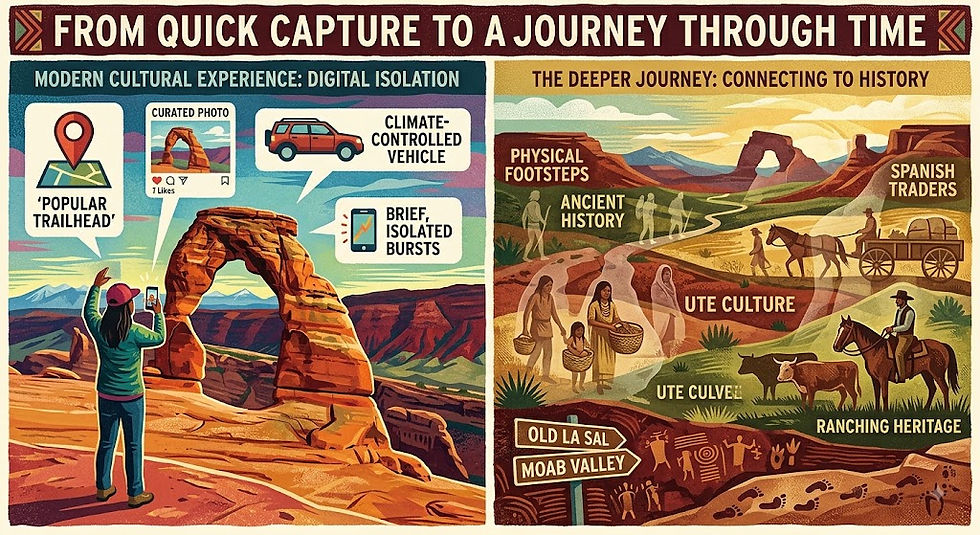
In our modern culture, outdoor travel is often reduced to a series of quick, highly curated digital photo opportunities. We plug a popular trailhead into a smartphone application, drive directly to a crowded gravel parking lot, march to a famous natural arch or overlook, capture a quick photo, and return to our climate-controlled vehicles. We experience the landscape in brief, isolated bursts, often separated from the rich human history and geographic context that makes these places so extraordinary.
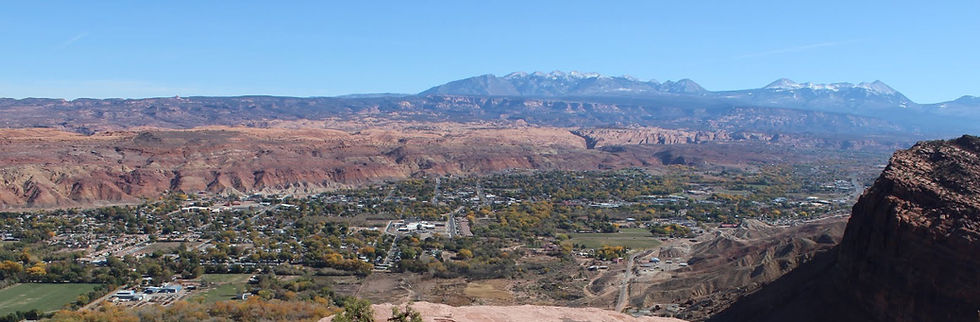
But when you explore the high-country backroads connecting the Moab Valley to the elevated basin of Old La Sal, you are not simply driving scenic routes. You are tracing the physical footsteps of ancient scouts, Ute family groups, early Spanish traders, and nineteenth-century ranchers.
For thousands of years, these high mountain passes were not recreational weekend scenic drives. They were vital lifelines—the high-altitude corridors that allowed human beings to survive, trade, and thrive across severe seasonal shifts.
As we continue our sub-series, Ancient Roads & Forgotten Passes, we shift from historical narrative to practical exploration. How can you structure a meaningful day trip across these historic mountain passes? What environmental realities do you need to understand before heading above 9,000 feet? And why does basing your journey in the quiet, elevated sanctuary of Old La Sal at Deer Creek Retreat offer the ultimate environment for physical and mental recovery?
Historical Passes Near Moab: A Self-Guided Alpine Exploration
To truly appreciate the geographic scale of the La Sal Mountains, you must understand how these high passes bridge two completely different ecological worlds: the red sandstone canyon floor at 4,000 feet and the cool alpine forests above 10,000 feet.
Here are two distinct, self-guided day-trip itineraries that allow you to trace these historical passes near Moab safely while experiencing the rich heritage carved into the landscape.
Itinerary 1: The Geyser Pass Alpine Loop
Starting Point: Deer Creek Retreat (Old La Sal) or Moab Valley
Primary Route: La Sal Mountain Loop Road to Geyser Pass Road (USFS Road 0071)
Peak Elevation: 10,536 feet at the Geyser Pass Saddle
Historical Context: Geyser Pass cuts directly between the massive north face of Mount Peale and the dark timberline of Haystack Mountain. This pass served as a primary high-altitude hunting corridor for ancient groups and later became a critical wagon route for early mountain settlers moving timber and livestock between Castle Valley and the eastern basins.
What to Observe on the Drive: As you climb from the piñon-juniper belt into shimmering quaking aspen groves, notice how the vegetation dramatically changes every thousand feet. At the top of the pass, walk a short distance along the ridge trail. Stand quietly and listen—the high-altitude wind moving through the Engelmann spruce carries the exact same unbroken solitude that greeted travelers centuries ago.
Itinerary 2: The La Sal Pass Wilderness Corridor
Starting Point: Old La Sal Basin
Primary Route: La Sal Pass Road (USFS Road 0073)
Peak Elevation: 10,125 feet at the La Sal Pass Summit
Historical Context: Positioned on the southern flank of the range between Mount Peale and Mount Waas, La Sal Pass provided a direct, strategic connection between the agricultural basin of Old La Sal and the lower canyon systems leading toward the Colorado River corridor. Early pack trains utilized this pass to bypass the scorching, waterless heat of the lower desert floor during mid-summer.
What to Observe on the Drive: This route offers dramatic, close-up views of Mount Peale's sheer quartzite talus slopes. Take time to stop near the summit lakes. Look west toward the distant red rock fins of Spanish Valley—from this elevated vantage point, you can clearly see why early scouts used these high mountain passes as universal points of orientation.
Essential High-Altitude Safety: The Desert Survival Protocol
While modern vehicles make driving historical passes near Moab far more accessible than it was for early travelers, high-altitude desert driving still demands respect, preparation, and situational awareness.
The La Sal Mountains are a real alpine environment. Weather conditions at 10,000 feet can be radically different from the weather on the Moab valley floor, often shifting from bright sunshine to heavy rain, hail, or lightning in less than twenty minutes.
When planning your day trip across these historic passes, always follow these four essential high-desert survival rules:
1. The 12:00 PM Lightning Rule
Summer thunderstorms in the high desert build rapidly during afternoon heating. Cumulus clouds that appear small and innocent at 10:00 AM can transform into severe monsoonal storm cells by 1:00 PM. Always aim to cross high alpine passes and return below the tree line before noon to avoid exposed lightning strikes on open mountain ridges.
2. The 1-Gallon Hydration Standard
The combination of high altitude, low atmospheric pressure, and extremely dry air accelerates body moisture loss through simple respiration. You lose water rapidly merely by breathing. Carry at least one gallon of fresh drinking water per person per day, even for short driving itineraries.
3. Rapid Temperature Swings
Temperatures drop approximately 3.5 to 5 degrees Fahrenheit for every 1,000 feet of elevation gained. A comfortable 85-degree day in the Moab Valley can easily translate to a chilly 55-degree afternoon at Geyser Pass, made even colder if mountain winds pick up. Always pack extra warm layers, rain shells, and sturdy footwear in your vehicle.
4. Vehicle & Fuel Prep
High mountain pass roads are unpaved, narrow, and often feature loose gravel, rutted soil, and steep drop-offs. Ensure your vehicle has adequate ground clearance, good tire tread, and at least a three-quarters tank of fuel before leaving paved highways. Cell service is virtually non-existent in high mountain canyons—download offline digital maps or carry a physical topographical map before departing.
Reframing Travel: The Philosophy of Slow Exploration
In our modern world dominated by tight schedules and digital notifications, we often carry our daily hurry into the outdoors. We rush through hikes, hurry along scenic drives, and check off tourist destinations like items on a corporate task list.
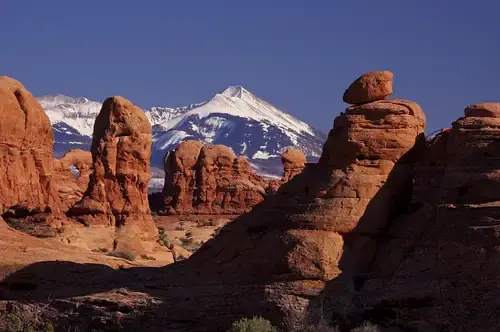
Exploring historical passes near Moab offers a powerful opportunity to practice slow, intentional exploration.
When you slow down and pay attention, the landscape begins to speak:
Geographic Literacy: Rather than seeing a random collection of rocks and trees, you begin to understand why trails were placed where they are—following natural drainage lines, avoiding impassable boulder fields, and seeking out sheltered springs.
Historical Empathy: Sitting quietly on a high pass allows you to imagine the immense physical grit required by early families moving through these same mountains with hand-carved tools, hide packs, and small children.
Personal Grounding: Disconnecting from digital noise and allowing your senses to absorb the immense scale of the La Sals provides an immediate reset for a tired mind.
The Biological and Neurological Impact of High-Altitude Quiet
The restorative power of spending time near these historic mountain passes in Old La Sal isn't just a poetic concept; it has a direct, measurable impact on human biology and nervous system recovery.
Sitting at an elevation above 6,000 feet in the La Sal basin, Old La Sal offers a rare atmospheric combination: thin mountain air, exceptionally low humidity, and zero artificial light pollution. When you step away from urban center humidity, traffic exhaust, and city noise, your body undergoes a rapid physiological recalibration.
1. Atmospheric Pressure and Respiration
High-altitude air forces a shift toward slower, deeper, and more deliberate breathing patterns. Without realizing it, visitors begin taking deeper diaphragmatic breaths, which directly stimulates the vagus nerve—the primary driver of the body's parasympathetic (rest-and-digest) system. Muscle tension in the jaw, neck, and shoulders begins to release as the body shifts out of chronic hyper-vigilance.
2. Melatonin Reset Under Dark Skies
Artificial blue light from streetlamps, vehicle headlights, and indoor screen glare suppresses the human body's natural melatonin production, severely disrupting deep REM sleep cycles. In Old La Sal, when the sun drops behind the western ridges, total natural darkness settles across the basin. Without light pollution, your brain naturally syncs with circadian rhythms, promoting deep, restorative sleep that is virtually impossible to achieve in a lit urban setting.
3. The Acoustic Void
In modern urban settings, your auditory cortex is constantly filtering out ambient low-frequency hums—traffic, HVAC units, electrical lines, refrigerators, and sirens. Even while sleeping, your brain works continuously in the background to monitor these ambient noises for potential threats. In the high desert, background noise levels drop to near absolute zero decibels. This acoustic void signals directly to the amygdala that it is safe to drop hyper-vigilance, allowing deep mental recovery to occur.
Attention Restoration: What Ancient Trails Teach Modern Minds
Psychologists and environmental researchers who study human performance often focus on a phenomenon known as Attention Restoration Theory (ART).
In our fast-paced, highly digitized world, modern humans spend almost all their cognitive energy operating in a state of directed attention. Every time you check a smartphone notification, navigate heavy highway traffic, review a spreadsheet, or process work emails, your brain draws from a strictly finite pool of mental focus. Over time, this constant cognitive strain leads to mental fatigue, heightened irritability, and a persistent, low-grade stress response.
Travelers exploring the historical passes near Moab experience a completely different relationship with their environment. Their minds engage in soft fascination:
Effortless Observation: Watching the shadow of a cloud drift slowly across a red sandstone ridge or listening to the evening breeze move through a stand of quaking aspens requires zero mental strain.
Sensory Recalibration: In the deep quiet of the high desert, the brain stops filtering out urban noise, allowing the nervous system to shift out of fight-or-flight mode and into active recovery.
Perspective and Scale: Looking up at a mountain range that has stood firm through centuries of seasonal shifts gently forces our immediate anxieties, daily schedules, and self-importance to shrink back down to size.
I’ve said it before: exploring the historic mountain routes near Moab isn't just an outdoor activity—it is an active mental reset. It gives your mind permission to stop managing constant inputs, process unedited thoughts, and reconnect with internal clarity. More than anything, it is about stepping into the shoes of early travelers, if only for a brief moment, and experiencing this raw, uncompromising landscape the exact same way they did.
🎒 Exploring Ancient Passes & Desert Trails? Get the Field Guide
Heading off the paved roads to explore historic passes or remote high-desert canyons? Download our complete Moab & La Sal High-Desert Survival Field Guide ($2.99). This bundled download includes our 1-gallon hydration formula, 12:00 PM alpine lightning rules, slot canyon flood protocols, and 10-essential trailhead audit checklist. Includes both a full-color mobile PDF for your phone and an ink-friendly printable edition for your daypack.
A Challenge to You: Claim Your Sanctuary at Deer Creek Retreat
The experience of reading about the historical passes near Moab was never meant to be glanced at quickly on a glowing screen, taken for granted, and forgotten. It was meant to be felt in the quiet of the crisp mountain air.
When you leave the noise and commercial busyness of downtown Moab behind and travel up into the elevated basin of Old La Sal, the atmosphere changes instantly. The traffic hum vanishes, the mountain air thins and cools, and the immense scale of the landscape takes over.
At Deer Creek Retreat, we offer two distinct, off-grid sandboxes designed specifically to give you a front-row seat to the majesty of the La Sal Mountains:

The Main Cabin
If you are traveling with family or a group of friends, the Main Cabin provides an expansive, comfortable sanctuary. Gather around the full kitchen to prepare meals, relax in the spacious living room, or spend your evenings on the covered porch watching the twilight colors shift across the high peaks of Peale and Tukuhnikivatz.
The Tiny Home
For solo travelers, couples, or anyone seeking a minimalist digital detox, the Tiny Home offers an intimate, deeply restorative footprint. Lean back in the reclining chairs on your private gravel seating area, watch the dark sky come alive with stars, and fall asleep under skylights framing the mountain skyline.
Your Challenge: Step off the busy highway and come experience the grounding quiet of Old La Sal for yourself. Whether you stay in the spacious comfort of the Main Cabin or the minimalist peace of the Tiny Home, book your stay at deercreeklasal.com and let the timeless stillness of this mountain retreat reset your spirit.
Cheers,
Justin
The Ancient Roads & Forgotten Passes Series
Part 4: In the Steps of the Ancestors: Historical Passes Near Moab
Exploring Ancient Passes & Desert Trails? Download our Moab & La Sal High-Desert Survival Field Guide ($2.99) for instant mobile and printable access to our 1-gallon hydration formula, 12:00 PM lightning cut-offs, and 10-essential trailhead audits.
About the Author
Justin holds a Ph.D. in Education and is an ordained professional chaplain, specializing in the integration of motivation and choice theory, psychological resilience, and pastoral soul care. He previously served ten years on active duty as a U.S. Army Chaplain in military training, field environment and a critical care hospital, where he learned to sit with people in their deepest valleys and darkest nights. He is the primary researcher and writer for grittygritgrit.com, a platform focused on perseverance, identity formation, and growth through adversity. Explore more reflections, high-desert writing, and lodging resources at deercreeklasal.com.


Comments